user02, Author at Slewing Ring Bearings Manufacturers Suppliers Exporters - 第11页 共13页


9 2 月, 2022

China Manufacturer High Quality Slewing Ring Bearing

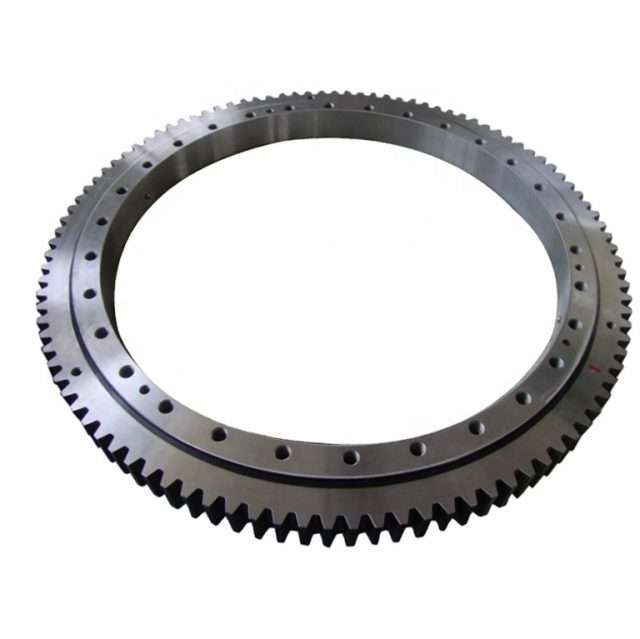
How to correctly install and maintain the slewing ring bearing

The following describes the correct installation and maintenance methods for the slewing bearing (slewing bearing) from three aspects: transportation, storage, installation and maintenance:

I. Transportation and storage of slewing ring bearing

The slewing bearing (slewing ring bearing) has been coated with anti-rust oil before leaving the factory and wrapped with film and linen. The rust-proof period of this package is generally 3-6 months.

The storage temperature should be 20±10°C, and the relative humidity is not more than 60%. After the expiration date, it should be maintained in time. The slewing bearing stock should be filled with grease after one year and check the flexibility of its rotation.

The slewing ring bearing (slewing bearing) is usually fixed on the pallet or in the package when it leaves the factory. It is available in single-piece packaging and group packaging.

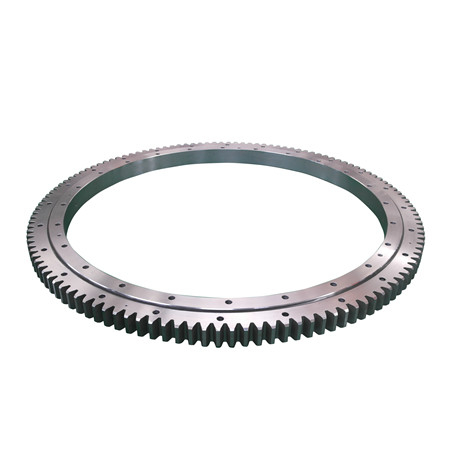
Transportation and storage should be kept level, can not be collided and squeezed, can not be rained, and the storage should be flat. There should be a flat separation between the stacked slewing bearings. The slewing ring bearing generally has a lifting hole, which can be screwed into the eyebolt for safe lifting.
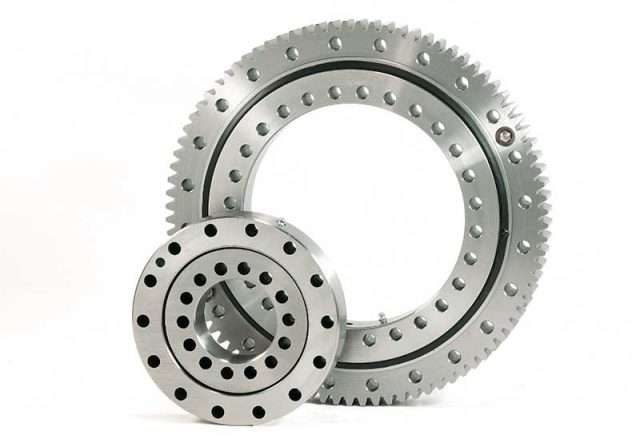
slewing ring bearing Alt

Second, the installation of slewing ring bearing

First open the slewing ring bearing (slewing bearing) package, check the certificate and the sign, and confirm that the slewing bearing type used is correct. The installation steps are as follows:

A, the installation plane of slewing ring bearing

The mounting surface should be smooth and remove all excess material such as paint residue, solder beads, burrs, etc. When cleaning, be careful not to let the solvent penetrate into the inside of the slewing ring, and do not use solvents that damage the sealing material.

The mounting surface should be dry and free of lubricant before assembly. Measures to protect workers and the environment should be taken.

B, the rigidity of the support

Standard slewing bearings and zero-gap slewing bearings have different requirements for the rigidity of the bearings.

C, positioning of slewing ring bearing

The inner and outer ring raceways of the slewing ring have a soft belt and should be placed on both sides of the main load plane. That is, it is shifted by 90 degrees from the main load zone.

There is a blockage at the soft belt or an “S” mark. Also check the slewing bearing and the mounting surface, usually with a feeler gauge. If the fit is not good, fill it with a suitable material. Welding work on the support is prohibited after installation of the slewing ring bearing.


D, solid bolt

1, the choice of mounting bolts

The bolts and washers should be installed using the specified (size, quantity, strength rating, etc.). Also note: Do not use fully threaded bolts, do not use old bolts, nuts and washers, do not use open washers such as spring washers, etc.

2, the choice of bolt pre-tightening torque

The pre-tightening force of ordinary metric bolts is recommended to take 0.6-0.7 times the bolt yield strength. It is recommended that the bolts larger than M27 use hydraulic fastening devices, and the pre-tightening force should not exceed 85% of the yield strength.

3, fastening bolts

The slewing ring should be installed under no load conditions. Note: Apply a little oil to the thread of the bolt to ensure that the friction resistance is balanced. Do not use glue on the bolt lock. Pre-tightening bolts: The pre-tightening should be carried out in three steps. The three-step force is 30%, 80%, and 100%, respectively.

E, adjust the gear backlash of slewing ring bearing

When installing a toothed slewing ring, it is important to properly adjust the gear backlash. It can be measured with a feeler gauge at the highest point of the radial runout of the gear, or it can be pressed with lead wire or other suitable method. If the backlash is not within the specified value, the movable pinion changes the center distance.

After setting, turn the slewing ring at least one full turn to confirm that there are no other tooth high jump points, and check the backlash false back gap after the slewing bearing is finally fixed. The highest point of the radial runout of the gear is marked in the groove with green paint.

F, first lubrication

1. Raceway lubrication To ensure sufficient lubrication, the grease specified in the drawings or the product manual should be refilled before initial use. Pay special attention to all the grease nozzles injecting the grease one by one, preferably by turning the slewing bearing while filling the oil until the grease is squeezed out of the seal.

2. Gear lubrication When the gear is lubricated, the tooth surface should be clean. It is recommended to brush the grease on the gear with a clean brush.


Third, regular inspection and maintenance of slewing ring bearing

Check the bolt preload torque for the first time using 100 working hours. If more than 10% of the bolts are loose, check again after the 200th working hour.

It will be inspected every 500 working hours in the future; the inspection interval should be shortened in harsh conditions.

After 2000 hours of cumulative operation of the equipment, if a bolt is found to be loose to less than 80% of the specified torque, the bolt and the adjacent two bolts are replaced. If 20% of the bolts are found to be loose to less than 80% of the specified torque, all bolts will be replaced.

After the equipment has been working for 14,000 hours, all the bolts will be replaced.

For equipment with a high speed of rotation or continuous rotation or frequent operation, add oil every 100 working hours. In the case of poor working conditions, the time interval for filling grease should be further shortened.

7 2 月, 2022

Good China Manufacturer Standard And Custom Slewing Bearing

Anti-corrosion and wear-resistant coating on sealing contact surface for slewing bearing

For large-scale high-end slewing bearings, due to special working conditions, such as working in muddy water, river water or sea water, special treatment is required for the sealing contact surface.

As a rubber seal contact, typically softness overcomes rigidity, and the sealing contact surface is often worn into grooves, so that the sealing effect is large. discounted, thereby losing the sealing function.

Surfacing stainless steel, with the help of stainless steel’s characteristics of non-corrosion, high strength, high hardness and good wear resistance, when combined with the slewing bearing, the welding performance is poor, and the grinding effect is unsatisfactory.

Brass surfacing, as the metal properties of brass, confirm that the hardness is moderate, the surfacing welding is easy to combine, and it is easy to accept as a traditional solution, when compared with sprayed ceramics, and so on.

Spraying ceramic process (chromium trioxide), high strength, high bonding performance, best surface roughness grinding, because of the particularity of ceramics, contact with rubber seals, almost no loss of precision, the best effect in experiment and practical .slewing bearing Alt

NoWear coated slewing bearings

NoWear is a wear-resistant carbon coating that can be applied to the rolling elements and inner ring raceway(s) of a bearing (designation suffix L7DA) or only the rolling elements (designation suffix L5DA) (fig. 1).

A physical vapour deposition process applies the wear-resistant carbon coating. Thickness of the coating ranges from 1 to 3 μm, depending on the size of the bearing. The hardness of the coating is 1 200 HV10.

NoWear coated bearing surfaces retain the toughness of the underlying material while adopting the hardness, improved friction properties and wear-resistance of the coating.

During the running-in period, minute amounts of the coating material are transferred to the counter-surfaces. This coating reduces friction and improves resistance against wear and smearing, even in bearings where only the rolling elements are coated.

Functional impairment due to base metal corrosion for slewing bearing

Base metal corrosion (red rust formation) is the most common type of corrosion on steel materials and is caused by the simultaneous presence of moisture and oxygen. In the metalworking industry, rust formation primarily impairs the component function and operating life.
As a general rule, minor corrosion to the exterior of a fitted bearing does not have an adverse effect. Rust formation in the interior of the bearing is, however, critical in many respects.

Localised pitting corrosion on rolling surfaces generates stress peaks during overrolling, which can lead to premature fatigue. As in the case of false brinelling, rust particles have an abrasive effect and lead to wear. Lubricants and seals serve to protect the internal components of a bearing.

The applied protective coatings act as surface protection in the outer area of a bearing and thus prevent damage to the rotary shaft seals.

Innovative coating variants as key technology for slewing bearing

With its innovative coating variants, Schaeffler ensures that premature fatigue does not occur, thus enabling long-term function.By optimising process parameters and making further developments in plant technology, Schaeffler is providing an important and futureoriented key technology for the deposition of thin and uniformly distributed coatings.

In the area of corrosion protection, the protective coatings produced in this way bring about an improvement in general component characteristics and play a key role in optimising components.

The outstanding characteristics of the original thin film coating(electroplated zinc alloy system) have been continuously improved by the further development of this system and the establishment of new coating systems, and correspond to (or significantly exceed) the current level of technology.

As a globally established system supplier of automotive and industrial components,Schaeffler equips its products with added value through state-of-the-art technologies based on high-performance surface treatments.


6 2 月, 2022

Wholesales High Quality Slewing bearing Maintenance Update 2022

1.Slewing bearing maintenance and repair methods and matters needing attention

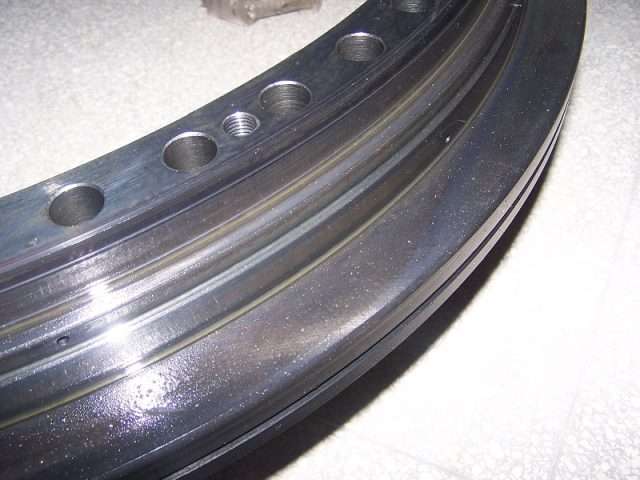
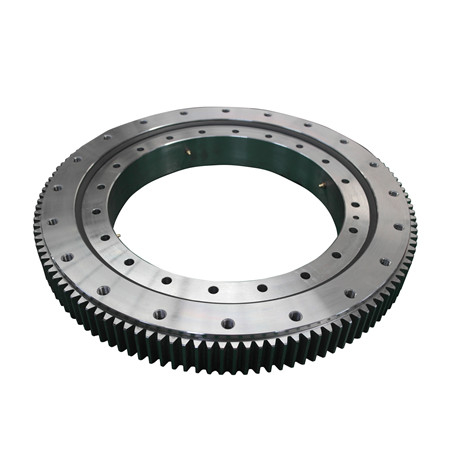
The mounting support of the slewing bearing maintenance must have sufficient rigidity and the mounting surface should be flat. Before assembling the slewing bearing, the slewing bearing maintenance should be treated with stress relief, and the slewing bearing maintenance and the slewing bearing should reduce the deformation of the slewing bearing. When assembling, the contact surface between the bearing and the slewing bearing must be cleaned.

slewing bearing maintenance Alt

2. Pay attention to the change of noise and the change of the slewing resistance torque during the use of the slewing bearing and the slewing bearing maintenance. If there is any abnormality in the slewing bearing maintenance and the slewing bearing, it should be dismantled and inspected.

3. The slewing bearing must be lifted or stored horizontally, and must not be lifted or stored vertically to avoid deformation.
​​
4. Before the slewing bearing maintenance and slewing bearing are tightened, the meshing inspection of the gear should be carried out, and the meshing condition should meet the requirements of the gear accuracy:

that is, the contact spots distributed on the tooth surface of the gear pair after running under slight braking are on the wheel. Not less than 25% in the direction of tooth height and not less than 30% in the direction of tooth length.
​​
5. The slewing bearing maintence and slewing bearing tooth surface should be cleaned for 10 shifts and re-applied with grease.
​​
6. Slewing bearing maintence and slewing bearing In order to ensure the reliability of bolt operation and avoid insufficient bolt pre-tightening force, after 100 hours and 500 hours of slewing bearing maintence operation, both slewing bearing and slewing bearing should check the pre-tightening torque of bolts respectively. The preload torque should be checked every 1000 hours thereafter

7. The bolts and nuts connecting the slewing bearing are made of high-strength bolts and nuts; double nuts are used to fasten and prevent loosening.
​​
8. When tightening the nut of the slewing bearing and the slewing bearing maintence, lubricating oil should be applied to the thread of the bolt and the surface of the nut, and the torque wrench should be used to tighten it symmetrically and evenly in the circumferential direction for many times.

The pre-tightening torque on each bolt should be approximately uniform when tightening the second pass.
​​
9. Four oil cups are evenly distributed on the upper surface of the ring gear of the slewing bearing aligned with the raceway, thereby adding grease to the raceway. Under normal circumstances, the slewing bearing runs for 50 hours with lubrication times. You must add enough oil each time until grease seeps out of the seal.

2.slewing bearing maintence effect

1. During the use of the machine, we should add lubricating oil to the bearing in time, because the excessive operation of the bearing can easily lead to a large number of wear problems. Dropping lubricating oil every two to three hours can reduce this problem. friction damage.
​​
2. The slewing bearing is a component with a high reimbursement rate in the whole machine, so when we buy the corresponding machine, we should pay attention to adding a few spare parts when purchasing the bearing, and the material of the spare bearing should also be selected well Otherwise, the bearing will be eliminated soon after use, or the performance of the machine will not be evaporated.
​​
3. The machine should be cleaned every month. At this time, don’t pay attention to dismantling the bearing for cleaning, and clear the large amount of oil or other dirt attached to the bearing, so as to make the whole bearing work effectively. be improved.

In addition, it should be noted that after the slewing bearing has been running for 100 hours, the bolt pre-tightening force should be checked, and every 500 hours of operation in the future must maintain sufficient pre-tightening force.

In use, it is forbidden to directly wash the slewing bearing with water to prevent water from entering the raceway, and strictly prevent hard foreign objects from approaching or entering the tooth meshing area.

Check the integrity of the seal frequently. If the seal ring is found to be damaged, it should be replaced in time, and if it is found to fall off, it should be reset in time. During use, grease should be added regularly. Generally, ball slewing bearings are refueled every 100 hours, and roller slewing bearings are refueled every 50 hours.

In special working environments, such as high temperature, high humidity, and dust , When the temperature changes greatly and when working continuously, the lubrication cycle should be shortened.

When injecting grease, turn the turntable bearing slowly so that the grease is filled evenly. For slewing bearings with internal teeth or external teeth, debris should be removed frequently and the corresponding grease should be applied.


29 1 月, 2022

Top 1 High Quality Slewing Bearing Installation Update 2022

What is the reason why the slewing bearing is not installed smoothly or even cannot rotate?

slewing bearing installation Alt

1. The reasons for the unsmooth of the slewing bearing installaton

1. Mounting holes. The threaded hole of the slewing bearing installation hole is not standardized, the threading is not complete, and the threading is defective, so that the bolt cannot be screwed in.
​​
2. The center diameter and chord length of the mounting hole exceed the tolerance too much, such as 3-5mm, which will cause the bolt to fail to pierce.
​​
3. The size of the positioning hole and the step are out of tolerance and cannot be matched.
​​
4. The bearing after heavy load has a rotating dead center or an ellipse, which makes it unable to operate normally.
​​
5. The slewing bearing installation is not in the direction of the installation design drawing, resulting in the opposite direction of the taper pin, which has potential safety hazards.
​​
6. The slewing bearing installation part interferes, such as tooth top interference, there is a phenomenon of gnawing teeth, and some parts conflict with each other.
​​
7. The design of negative clearance is unreasonable, which leads to the phenomenon of inclined force, partial load and clearance after installation.
​​
8. The design of the equipment structure is unreasonable, which leads to the failure of normal debugging.

2. The possibility that the slewing bearing installation is difficult to rotate or cannot rotate

1. Newly purchased products are inflexible in idling
​​
Please check the production date of the slewing bearing. If the weather is cold for a long time (such as more than half a year), it is possible that the temperament such as salt mist is mixed into the raceway,

which will cause the rotation resistance to double and make the slewing bearing not work well (cold areas, winter is more prominent ) Remedy:

If it can run after afterburning and there is no other abnormality, it can be used normally.
​​
2. Inflexible operation after slewing bearing installation
​​
It may be that the surface of the main engine device and the surface of the slewing bearing installation are not well matched, so that the axial clearance of the slewing bearing after the installation cannot compensate for the deformation of the slewing bearing,

the slewing bearing is in a state of negative clearance, and the rolling elements are difficult to operate in the raceway (sometimes accompanied by abnormality). sound) or the large and small gears are poorly meshed;

or there are foreign objects stuck in the large and small gears. Remedy: re-process the plane of the host device to make the device plane meet the requirements;

re-adjust the meshing backlash of the large and small gears according to the requirements, especially pay attention to the gear beat position;

check to ensure that there is no foreign matter in the meshing position of the large and small gears; replace a slewing bearing with a slightly larger clearance .
​​
3. Inflexible operation during use
​​
The sealing strip is damaged, causing foreign objects to enter the raceway (such as poor working conditions, immersion of dust in the raceway, etc.) the deformation of the isolation block leads to difficulty in operation;

there are hard objects or other conditions at the meshing of the large and small gears, such as broken teeth.


27 1 月, 2022

OEM 50mm to 9000mm Slewing Ring Bearing OEM

OEM 50mm to 9000mm Slewing Ring Bearing OEM

Slewing bearings are widely used in various types of machinery and equipment. At present, there are many brands of slewing bearings on the market, and the quality is also different. So, how to choose a slewing bearing? What should I pay attention to when buying a slewing bearing? In order to select the slewing bearing products of qualified quality.

When purchasing slewing ring bearings, there are many issues that need to be paid attention to, such as load, strength of bolts, and whether there are uniform bolt holes.

Is the distribution of slewing ring bearing load reasonable?

Bearings are mounted on a lack of a uniform support surface, and a common mistake during the design phase of the support structure is that the slewing ring assumes that the support structure is sufficiently rigid. However, local deformation can change the load, causing the bearing to have different load magnitudes. Failure to take proper steps can easily lead to slewing ring bearing failure.

Is the slewing ring bearing bolt strong enough?

Be sure to choose the right slewing ring bearing product for your installation. This stage is often overlooked, leading to the possibility of system failure. Typically, equipment designers are responsible for determining the correct type of fasteners required for the project.

However, fastener suppliers and manufacturers should really get a measure of what a given fastener can withstand. They will be able to assist in the calculation of the bolt loads to confirm the integrity of the fasteners.

slewing ring bearing Alt

Is there a unified slewing ring bearing bolt hole design?

Fasteners need to be placed in more places in larger load areas. Bolt holes can be used as hazardous support structures only in areas where large loads occur and should therefore not be ignored in the overall design of the product.

It is important to remember that there is a lot of exercise load, not just the mounting part. Uniform bolt circles can help reduce bending and load distribution in bearings, fasteners, and support structures.
​​
In addition, when we buy a slewing ring bearing, we should also pay attention to the toughness of this product, because this part is very thin, so many parts look good, but it will be reimbursed after using it in the machine for a long time. When choosing, you can actually buy a few more brands and practice them in practice.
​​
When purchasing slewing bearing products, be sure to look at the brand words and labels printed on the slewing bearing. Most of the products produced by the factory use steel stamping technology, the fonts are very small, and they are embossed before heat treatment, so although the fonts are small, they are deeply concave and very clear.

The fonts of counterfeit products are relatively vague. Due to the rough printing technology, the fonts float on the surface, and some can even be easily erased by hand.

2.The slewing ring bearing application

1. Lifting machinery

Lifting machinery includes truck cranes, tower cranes and trailers, etc. Due to the harsh environment of these machines, the rotating parts are often subject to great impact, so these parts will use customized slewing bearings.

For example, to provide the LYMC bearing manufacturer with the size and operating environment required by the machine, the manufacturer will arrange the engineer to design the suitable bearing according to the actual situation, and then put it into use, which can not only meet the needs of the lifting machinery, but also prolong the service life. Huge improvements.

​​2.Construction machinery

The simple division of construction machinery is like excavators, loaders, etc. The slewing bearing can bear axial force, radial force and overturning force at the same time, and the structure is very compact. It needs to be rotated continuously during the operation of the excavator. The slewing bearing is the core component of the rotation. The application of construction machinery belongs to the basic application of slewing bearing, and it is also widely used.
​​
3. Processing machinery
​​
Processing machinery like material processing, food processing, metallurgy and so on. With the continuous development of science and technology, people are no longer satisfied with the application of slewing bearings only in construction machinery, and turn their attention to equipment platform processing machinery. Because the slewing bearing is more compact than the original bearing, the external force can also be larger, and the performance and structure are better, so it is also widely used in processing machinery.
​​
4. Military equipment
​​
The current military competition is about the hard power of military equipment. As we saw on TV, the tank turns the cannon head, and a shell hits the target accurately. In this link, the slewing bearing plays a very good supporting role;

There are also anti-aircraft guns, radars, rocket launch pads, etc., a very important structure in the timely rotation, jump and stable launch of military equipment is the turntable bearing, which has better performance than traditional bearings.
​​
5. Medical machinery
​​
In many large-scale medical equipment, in order to take care of the patient’s physical condition, it is necessary to rotate the equipment in time to adapt to the patient’s body. At this time, the equipment is required not only to have high accuracy, but also to have low noise.

These rotations require slewing bearings. help. The high-accuracy, low-noise, long-life, and high-reliability series of medical equipment spindle rotary bearings developed now have been widely used in large medical equipment such as gamma knives, CT machines, and nuclear magnetic resonance machines.
​​
6. Others
​​
In addition to its applications in industry and medical care, slewing bearings have its shadow in the field of power generation and life. The yaw bearing of wind turbines is installed at the connection between the tower and the cockpit, and the pitch bearing is installed at the root of each blade. connection with the wheel hub.

Each wind turbine uses one set of yaw bearing and three sets of pitch bearing. Through the application of slewing bearing on wind power generation equipment, the process of generating electricity can be effectively changed by the difference of wind power.

In the whole process, the part where the root of the blade is connected with it is the concrete embodiment of the slewing bearing. The main applications of slewing bearings in life are concentrated in playgrounds, such as Ferris wheels, roller coasters, pendulum clocks and merry-go-rounds, etc. The effective application of slewing ring bearings has ensured the safety of life.


26 1 月, 2022

Luoyang Slewing Bearing Material

What are the commonly used for luoyang slewing bearings materials?

Slewing bearing, also called slewing ring bearing, is often used in engineering and manufacturing machinery, such as excavators, roadheaders, wind power generation equipment, industrial robots, port machinery and other equipment.

The slewing bearing is usually composed of ferrules, rolling elements, cages, sealing rings, etc. Since different parts have special functions in practical applications, there are different considerations in the design and selection of slewing bearing materials.

1.slewing bearing materials for ring and rolling elements

In general, the rolling elements of the slewing ring material are made of carbon-chromium bearing steel which is hardened as a whole. The grade is made of GCr15 or GCr15SiMn steel; the slewing bearing ring material is made of surface hardened steel.

When the user has no special requirements,the slewing bearing material it is generally made of 50Mn steel, but sometimes in order to meet the needs of the host in some special applications For specific use conditions,the slewing bearing material  select other grades of surface hardened steel, such as 42CrMo, 5CrMnMo, etc.

Small and medium-sized slewing bearing forgings all use round or square bars as blanks. The grain structure and mechanical properties of the bar are uniform and good, the shape and size are accurate, and the surface quality is good, which is convenient for mass production.

As long as the heating temperature and deformation conditions are reasonably controlled, forgings with excellent performance can be forged without large forging deformation.

Ingots are only used for large forgings. The ingot is an as-cast structure with large columnar crystals and a loose center.

Therefore, through large plastic deformation, the columnar crystals must be broken into fine grains, and the loose compaction can be obtained in order to obtain excellent metal structure and mechanical properties.

2. Materials for cage

The cages for slewing bearings materials have integral, segmented, spacer block and other structural forms. where integral and segmental hold
​​
The frame is made of 20-gauge steel or ZL102 cast aluminum alloy. The spacer block type is made of polyamide 1010 resin, ZL102 cast aluminum alloy, etc.

In recent years, with the continuous development of the material industry, nylon GRPA66.25 has also been popularized and applied in the design of segmented cages.

slewing bearing material Alt

3. Slewing bearing materials of sealing ring

The  slewing bearing  materials sealing ring is made of oil-resistant nitrile rubber, oil-resistant rubber and fluorine rubber. The slewing bearing materials used for the seals must be able to withstand a wide operating temperature range and have certain chemical resistance.
​​
The codes of the ferrule for slewing bearing material and the supply status of the blank are as specified in the table. In the table, “T” means that the blank of the ring is supplied in a quenched and tempered state, and “Z” means that the blank of the ring is supplied in a normalized state.
​​
Code 01 02 03 04 05 06.
​​
Material and rough state 45BT 45BZ 42CrMoT 42CrMoZ 5CrMnMoT 5CrMnMoZ.
​​
Code 07 08 09 10 11 12.
​​
Material and rough state 42SiMnT 42SiMnZ 45MnT 45MnZ 50MnT 50MnZ.
​​
The diameter of the center circle of the rolling element is 3150mm, the diameter of the ball is 75mm, the gear modulus is m=20mm, the ring material is 50Mn, and the blank material is the normalized state. .
​​
The above is a brief introduction to the commonly used materials for slewing bearings. Luoyang MC is a comprehensive entity enterprise integrating design, research and development, production, sales and service of slewing bearings/slewing bearings.

It mainly produces slewing ring/slewing ring bearings with a diameter of 50-9800mm and various high-precision slewing rings, large thrust ball bearings, non-standard special-shaped bearings and other products.

The precision covers four grades of P0, P6, P5, and P4. Four-point contact ball structure, crossed cylindrical roller structure, three-row cylindrical roller structure, double-row ball slewing bearing, ball-column joint structure, thin-walled flange structure, large thrust ball structure, etc.


25 1 月, 2022

About Slewing Bearing Grease

What is the purpose of slewing bearing grease? grease method?

Rolling bearings are precision parts and are lubricated before leaving the factory. No matter how high-performance bearings are used, if the lubrication is not in place, it will not only fail to achieve the expected high performance, but also affect the service life of the bearings.

First, the purpose of slewing bearing grease

The purpose of slewing bearing grease is to reduce the internal friction and wear of the bearing, prolong the service life, cool the harvest, prevent burning, rust, and prevent foreign objects from invading the inside of the bearing.
​​
1. Reduce friction and wear
​​
In the mutual contact part of the bearing ring, rolling element and cage, prevent metal contact, reduce friction and wear.
​​
2. Extend the service life of bearings
​​
Bearings are prone to fatigue life in high-speed operation, and the use of lubricating grease can prolong the service life of bearings.

high quality wholesale slewing bearing grease Alt

3. Discharge friction heat and cool bearings
​​
Circulating oil supply method, etc., can use oil to discharge heat generated by friction, or heat from outside, and cool it. Prevent the bearing from overheating and prevent the aging of the lubricating oil itself.
​​
4. Other functions
​​
High and low temperature, corrosive environment, humid environment, water drenching environment, etc., these are all easy to cause the production of foreign bodies, the rust of bearings, and the corrosion of their own bearings. The best slewing bearing grease can prevent foreign matter from intruding into the interior, preventing rust and corrosion of the bearing.

2.Lubrication method of bearings

​​The lubrication methods of bearings are mainly grease lubrication and oil lubrication. In order to make the bearing function well, first of all, it is necessary to select a lubrication method suitable for the conditions of use and the purpose of use.

If only lubrication is considered, the lubricity of oil lubrication is dominant. However, grease lubrication has the advantage of simplifying the structure around the bearing. Compare the advantages and disadvantages of grease lubrication and oil lubrication.
​​
At present, oil lubrication is mostly used, among which oil and gas lubrication is very popular. Oil-air lubrication is a new lubrication method that has gradually become popular in recent years.

It is fundamentally different from other lubrication methods in that it can control the oil supply and achieve an ideal lubrication effect. Therefore, in recent years, oil-air lubrication has gradually replaced other lubrication methods.

3. Filling of slewing bearing grease

1. Filling with grease
​​
After the bearing is installed, it needs to be supplemented with grease before running. When filling the grease, the bearing should be rotated while filling to make the grease evenly distributed until the grease overflow is observed at the lip of the sealing strip on the bearing.

2. Daily automatic grease injection
​​
After the grease is injected, the automatic grease injection system can be turned on, and a certain amount of grease can be injected every day (regularly) to meet the normal use of the bearing. The amount of grease injected for two months should at least reach the internal cavity volume of the slewing bearing.

In order to ensure that sufficient grease enters Bearings, on the one hand, pay attention to the consumption of grease, and on the other hand, regularly check the oil circuit to prevent leakage.
​​
Every three months or so, a concentrated grease injection should be carried out inside the slewing bearing, and a large amount of grease should be injected into the upper grease injection hole until the lip of the upper sealing strip evenly overflows with fresh grease.

4, three-row roller slewing bearing grease

The bearing structure has the largest cavity in the upper row of the main stress-bearing raceway, and the upper row of raceway grease will move to the lower row of raceways during operation.

The amount of grease injected into the upper row should be appropriately increased. 130% of the fat mass.

5. What are the commonly used greases for slewing bearings?
​​
The commonly used lubricating greases are calcium-based grease, lithium-based grease, aluminum-based grease and high-temperature grease, etc. The user can choose the appropriate grease according to the specific situation.


24 1 月, 2022

Causes and preventive measures of shaking during operation of slewing bearing

Slewing bearing, also known as slewing bearing and slewing bearing, is one of the important components of modern construction machinery slewing devices, such as excavators, cranes, pile drivers, graders, road rollers, dynamic compactors, roadheaders, tower cranes, etc.

Slewing bearings will be used in all cases. Due to the large load operation and the harsh working environment, the operation is not smooth (jitter) and the noise exceeds the standard (abnormal noise). So, what is the reason for the jitter when the slewing bearing is running?

1.The reason for the jitter of the slewing bearing during operation.

​​1. Internal machining accuracy of slewing bearing
​​
The machining accuracy of the steel ball inside the slewing bearing and the machining accuracy of the inner raceway are not high, or there are quality defects and the lack of lubricating oil in the raceway. When the slewing bearing is defective, sometimes the frequency of failure can be reduced by replacing the steel ball.
​​
2. The machining of gears is not precise enough
​​
The gear accuracy grade of the slewing bearing should be between 7 and 11, which determines the stability of the slewing bearing transmission, the uniformity of the load distribution and the transmission accuracy.

The higher the gear precision, the denser the contact spots of the meshing tooth surface, so that the noise value is reduced and the operation stability is improved.
​​
3. Welding defects of upper and lower supports
​​
If the welding quality is not up to standard, it is necessary to repair and repair the weld defects. During repair welding, it will not only generate new welding stress, but also have a great impact on the flatness of the machined mounting surface.

At the same time, the current generated by welding will also cause certain damage to the internal rolling elements and raceways when passing through the slewing bearing. damage.

In addition, if the assembly error generated in the manufacturing and assembly, the threading of the pin shaft and the pre-tightening of the bolts in the field installation do not meet the specified requirements, abnormal noise or vibration will also occur.
​​
4. Quality problems of gears and starting motors
​​
Due to the long working time of the gear under load, small pieces of metal or strip-shaped metal iron filings will appear near the pitch line of the tooth surface, resulting in pitting or gnawing.

The pitting corrosion of the tooth surface continues to expand with the increase of working time, so that the meshing tooth profile is damaged, the noise and impact during rotation increase, and the metal particles impacted repeatedly accelerate the wear of the tooth surface, forming a vicious circle.

In addition, the manufacturing and assembly of the starter motor in the slewing mechanism has its own defects, which produce shock jitter, and the meshing process between the drive wheel and the support is unstable, which also increases the frequency of jitter and the decibel of abnormal noise.

slewing bearing Alt

2.Preventive measures for slewing bearing jitter

​​1. Installation and operation
​​
High-strength bolts should be selected for the installation of slewing bearings, and the bolts and nuts should meet the requirements of GB3098.1 and GB3098.2 standards.

It is forbidden to use spring washers. Before the mounting bolts are tightened, the meshing adjustment (backlash) of the large and small gears must be carried out to ensure that the meshing of the slewing bearing and the pinion meets the requirements.

Tighten the mounting bolts at 180°, the mounting plane must be clean and flat, and there must be no burrs, iron filings and other debris, and the plane must meet the following requirements: the slewing bearing often has broken teeth during operation, so it is also

The influence of wind on the slewing bearing should be taken into account. If the jib cannot rotate freely with the wind after the operation exceeds the specified wind force or stops the operation, it may damage the gear meshing with the bearing or the slewing bearing, and a serious safety accident will occur.

Therefore, detailed inspection should be done during installation and operation.
​​
2. Fastening bolts
​​
The connecting bolts of the slewing bearing and the upper and lower supports are not only subjected to the pre-tightening force, but also subjected to the axial pulsating load, which will cause the bolts to be elongated or the connecting surface to deform, making the bolts loose.

If the loosening pre-tightening force of the bolt connection fails to meet the requirements, the axial clearance will increase, the rolling elements will be rotated by a large overturning moment, and the edge of the raceway will be subjected to huge contact stress, which will cause the edge of the raceway to be damaged.

Therefore, the tightening of the slewing bearing bolts must be checked regularly to make it reach the specified pre-tightening force, which is generally 400-500 N.m.
​​
3. Internal lubrication of slewing bearing
​​
In daily use, each part should be lubricated according to the lubricant, lubrication method and lubrication cycle regulations in time and on time according to the instruction manual. The corresponding ball slewing bearing is generally refilled every 100 hours of operation, and the roller slewing bearing is filled every 50 hours.

For special working environments with a lot of dust, high humidity and high temperature difference, the lubrication cycle should be shortened.

The raceway must be filled with each lubrication until the lubricating oil seeps out, and the slewing bearing needs to be slowly rotated to make the grease evenly filled while filling.

By adding lubricating oil for maintenance, the friction between the gear pairs can be reduced, the wear speed of the gear ring can be slowed down, and the formed oil film can also act as a shock absorber to eliminate part of the vibration energy generated during operation.

In addition, the lubricating oil film can also lubricate and clean the friction surfaces well, prevent rust, and eliminate the influence of iron filings on the friction surfaces. Thereby reducing the friction noise of the operation and increasing the service life of the bearing.


21 1 月, 2022

China Luoyang Factory Supplier-Slewing Bearing Operating Temperature

What is the slewing bearing operating temperature?

The slewing bearing is a very important part in the machine. Basically, every machine needs this part. Because this part is relatively fragile, it can also be regarded as a kind of consumables. You need to buy it frequently to keep the machine in good condition. normal operation. Let’s take a look at the slewing bearing operating temperature.slewing bearing operating temperature Alt

The slewing bearing opearing temperature can work normally at -300C~+700C. If the user needs to adapt to the lower or higher temperature slewing bearing, our company can make special design.

If the slewing bearing operating temperature is used in particularly harsh environments, such as marine climate, dust or abrasive particles, sand, cement, coal powder, etc.

Special sealing rings, protective devices, and suitable oil passages should be selected. Therefore, in order to make your support function normally, it is hoped to do a good job in daily maintenance and maintenance.

The tooth surface of the slewing bearing operating temperature should be cleaned and changed every 8-10 working days, and foreign matter should not be mixed.

Characteristics of slewing bearing materials

The slewing bearing is mainly composed of ferrules, rolling elements, cages, sealing rings, etc. Since different parts have special functions in practical applications, there are different considerations in the design and selection of materials.

In general, the rolling elements of the slewing ring are made of carbon-chromium bearing steel that is hardened as a whole. The slewing bearing ring is made of surface hardened steel.

When the user has no special requirements, it is generally made of 50Mn steel, but sometimes in order to meet the needs of the host in some special applications, other grades of surface can also be selected according to the specific conditions provided by the user. Hardened steel, such as 42CrMo, 5CrMnMo, etc.

For small and medium slewing bearing forgings, round or square bars are used as blanks. The grain structure and mechanical properties of the bar are uniform and good, the shape and size are accurate, and the surface quality is good, which is convenient for mass production.

As long as the slewing bearing operating temperature and deformation conditions are reasonably controlled, forgings with excellent performance can be forged without large forging deformation.

Ingots are only used for large forgings. The ingot is an as-cast structure with large columnar crystals and a loose center.

Therefore, through large plastic deformation, the columnar crystals must be broken into fine grains, and the loose compaction can be obtained in order to obtain excellent metal structure and mechanical properties.

The cages for slewing bearings have integral, segmented, spacer block and other structural forms. The integral and segmented cages are made of 20-gauge steel or ZL102 cast aluminum alloy.

The spacer block type is made of polyamide 1010 resin, ZL102 cast aluminum alloy, etc. With the continuous development of the material industry, nylon GRPA66.25 has also been popularized and applied in the design of segmented cages.

The material of the slewing ring seal is made of oil-resistant nitrile rubber. The codes of the ferrule material and the supply state of the blank are as specified in the table. In the table, “T” means that the ring blank is supplied in a quenched and tempered state, and “Z” means that the ring blank is supplied in a normalized state.

Slewing ring adapts to temperature and working environment

Slewing rings operating temperature can work normally from – 300C to + 700C. If users need to adapt to lower or higher temperature slewing rings, our company can make a special design.

If the slewing bearing operating temperature is used in particularly harsh environments, such as marine climate, dust or abrasive particles, sand, cement, pulverized coal, etc.

A special sealing ring, protective device, and proper oil passage must be selected. Therefore, in order to make your support work normally, we hope to do a good job in daily maintenance.

There are 4 types of slewing bearings:

a. Single row four-point contact ball slewing bearing:

It is composed of two seat rings, compact structure, lightweight, four-point contact between steel ball and circular arc raceway, and can bear axial force, radial force, and overturning moment at the same time. Small and medium cranes can be selected.

b. Double-row ball slewing bearing:

The double volleyball slewing bearing has three seats, and the steel balls and isolation blocks can be directly discharged into the upper and lower raceways. This kind of open assembly is very convenient.

The bearing angles of the upper and lower circular raceways are all 90 ° and can bear large axial force and overturning moments. It is especially suitable for tower cranes with a medium diameter or above.

c. Single-row crossed roller slewing bearing:

The single-row cross roller slewing bearing is composed of two seat rings, with compact structure, lightweight, high manufacturing accuracy, small assembly clearance, and high installation accuracy requirements.

The roller is 1:1 cross arrangement, which can bear axial force, overturning moment, and large radial force at the same time.

d. Three-row roller slewing bearing:

The three-row roller slewing bearing has three seats, and the upper, lower, and radial raceways are separated respectively so that a load of each row of rollers can be determined accurately.

It can bear all kinds of loads at the same time. It is one of the four products with the largest bearing capacity. The shaft and radial dimensions are large, and the structure is firm. It is especially suitable for heavy machinery requiring a large diameter.


20 1 月, 2022

Disassembly method of slewing bearing

Disassembly method of slewing bearing

Bearings, as a kind of mechanical conventional parts, are unavoidable with the use of equipment,

so when our equipment or machines are routinely repaired or damaged, we need to disassembly method of the slewing bearings, especially when the bearings are disassembled for faults, check the parts around the bearings, lubricate them.

The situation of the agent and the bearing itself can know the fault more clearly, then the following will introduce the disassembly method of slewing bearing.

1.Instructions before disassembly of slewing bearing

1. Use of dismantling tools to disassenbly of slewing bearing
​​
(1) Use manual or hydraulic
​​
(2) Only use a special wrench
​​
(3) Use a puller
​​
(4) Use induction heating equipment (inner ring)
​​
(5) Use oil injection method

2.How to disassembly method of slewing bearing​​

(1) It should be carried out by or under the guidance of experienced personnel;
​​
(2) Before starting the disassembly the slewing bearing, determine the specific method to be disassembled;
​​
(3) Keep the necessary bearing removal tools handy;
​​
(4) When reusing or inspecting a disassembly the slewing bearing, be careful to avoid scratching or damaging the bearing raceway or rolling elements;

when disassembly the method of slewing bearing from the bearing seat, the disassembling force is applied to the outer ring; when disassembling the bearing from the shaft, the disassembling force is applied to the outer ring. inner circle;

Disassembly method of slewing bearing Alt

Second,the disassembly method of slewing bearing

​​1. Cold disassembly method of slewing bearing
​​
When removing smaller bearings, the bearing ring can be removed from the shaft by lightly tapping the side of the bearing ring with a suitable punch, preferably with a mechanical puller. The pull should act on the inner ring or adjacent components.

Removal can be simplified if the shaft shoulder and housing shoulder have grooves to accommodate the puller grip. In addition, some threaded holes are machined at the position of the hole shoulder to facilitate the bolt to push the bearing out.
​​
Large and medium-sized bearings often require more force than machine tools can provide. Therefore, the use of hydraulic power tools or oil injection, or both, is recommended. This means that oil holes and oil grooves need to be designed on the shaft.
​​
2. Hot disassembly method of the slewing bearing
​​
When disassemblingmethod of the slewing bearing for  the inner ring of needle roller bearings or NU, NJ, and NUP cylindrical roller bearings, the hot disassembly method is suitable.

Two commonly used heating tools: heating rings and adjustable induction heaters.
​​
The heating ring is usually used to install and remove the inner ring of small and medium-sized bearings of the same size. The heating ring is made of light alloy. Heating rings are radially slotted and equipped with electrically insulating handles.
​​
If the inner rings of different diameters are frequently disassembled, it is recommended to use a debuggable induction heater. These heaters quickly heat the inner ring without heating the shaft.

When disassembling the inner ring of a large cylindrical roller bearing, some special stationary induction heaters can be used.
​​
3. Remove the bearing installed on the conical shaft diameter
​​
The small bearing can be removed by pulling the inner ring with a mechanical or hydraulic puller. Some pullers are equipped with spring-operated arms, and the use of this self-aligning design of the puller simplifies the procedure and avoids damage to the journal.

If the puller claws cannot be used on the inner ring, the bearing should be disassembled through the outer ring or by using a puller combined with a puller.
​​
When using the oil injection method, the disassembly method of slewing bearing for medium and large bearings will be safer and easier. This method injects hydraulic oil between two conical mating surfaces under high pressure through oil holes and oil grooves.

The friction between the two surfaces is drastically reduced and an axial force is created that separates the bearing and shaft diameter.
​​
4. Remove the bearing on the adapter sleeve
​​
For the small bearing installed on the adapter sleeve with the straight shaft, you can use a hammer to knock the small steel block that acts evenly on the end face of the inner ring of the bearing to remove it.

Before doing this, the adapter sleeve lock nut needs to be loosened a few turns.

For small bearings mounted on the stepped shaft of the adapter sleeve, it can be removed by hitting the small end face of the adapter sleeve lock nut with a hammer through a special sleeve. Before doing this, the adapter sleeve lock nut needs to be loosened a few turns.

For bearings mounted on a stepped shaft with an adapter sleeve, the use of a hydraulic nut makes bearing removal easier. To do this, a suitable stop must be installed close to the hydraulic nut piston. Oil injection is the easier method, but an adapter sleeve with oil holes and oil grooves must be used.
​​
5. Remove the bearing on the withdrawal sleeve
When removing the bearing on the withdrawal sleeve, the locking device must be removed. (such as lock nuts, end plates, etc.) For small and medium-sized bearings, lock nuts, hook wrenches or impact wrenches can be used for disassembly.
​​
For medium and large bearings installed on the withdrawal sleeve, the hydraulic nut can be used to easily disassemble. It is recommended to install a stop behind the hydraulic nut on the shaft end.

The stop device can prevent the withdrawal sleeve and the hydraulic nut from flying out of the shaft when the withdrawal sleeve is suddenly separated from the mating position.


About us

Headquarters

Luoyang MC Bearing Technology Co.,Ltd (LYMC)
+86 13837949030

www.chinaslewingbearings.com/

[email protected]

LOCATIONS

We are everywhere


GET IN TOUCH

Follow our activity

LYMC bearings are the perfect alternative to the most common and well-known brands.