user02, Author at Slewing Ring Bearings Manufacturers Suppliers Exporters - 第3页 共13页


19 7 月, 2022

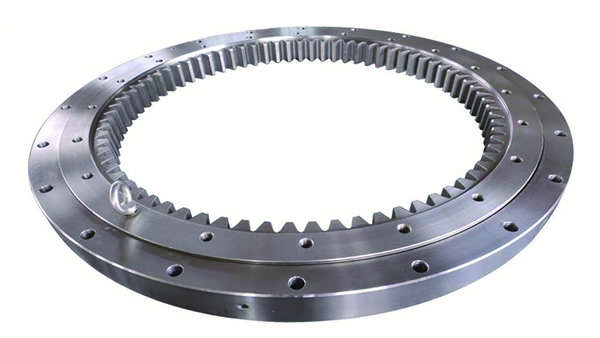
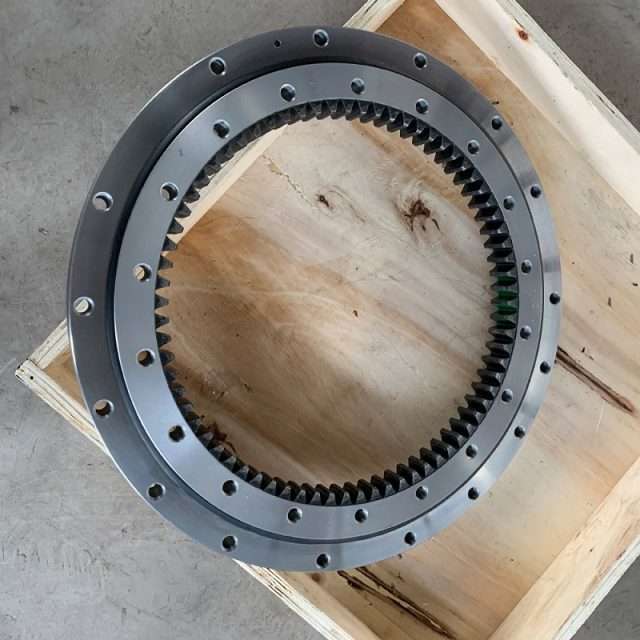
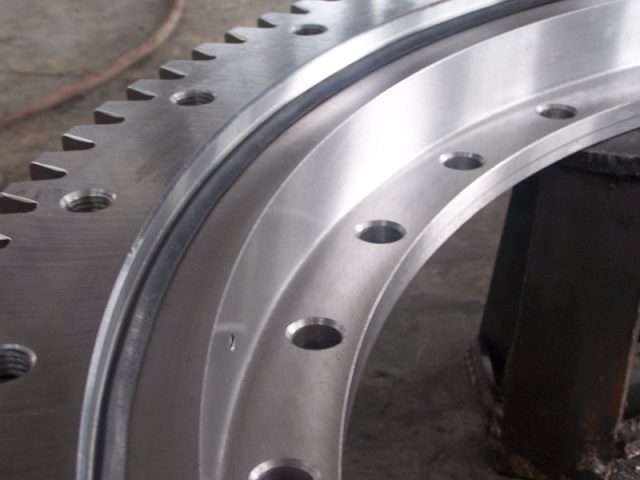
bulk slewing ring

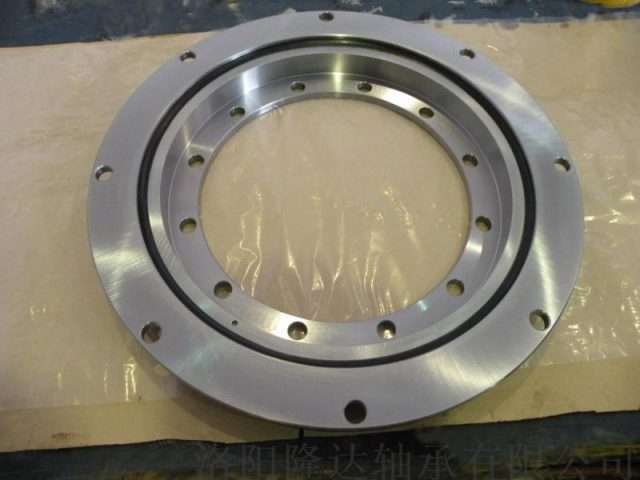
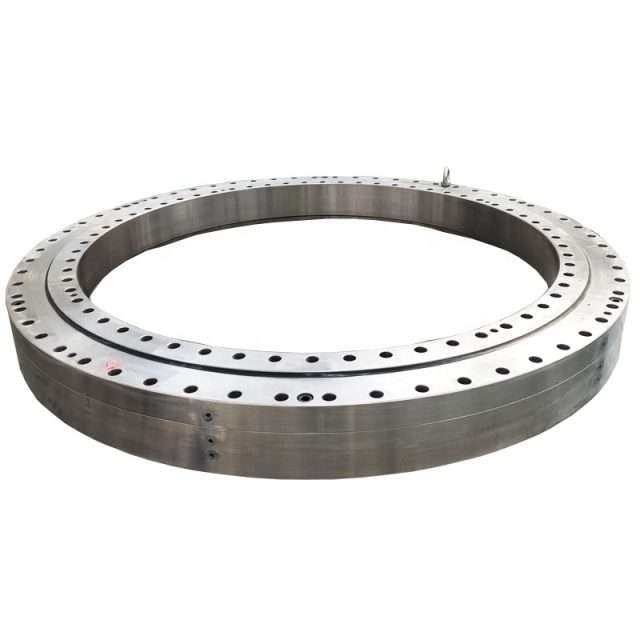
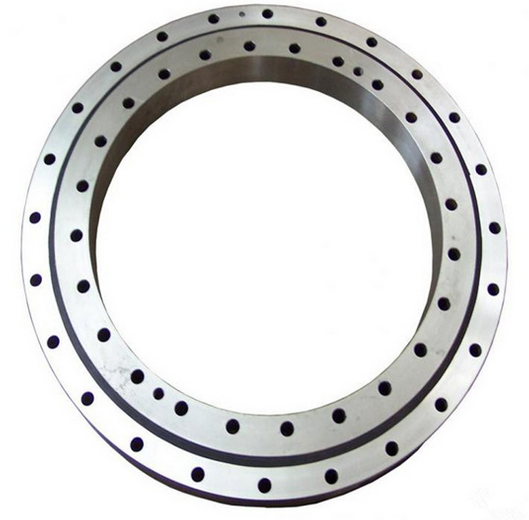
1.What is the reason for the overturning and shaking of the slewing ring?

With the rapid development of the machinery industry, slewing rings have been widely used in marine equipment, construction machinery, light industrial machinery, metallurgical machinery, agricultural machinery and other industries. In the process of installation and use, improper use or maintenance of the slewing ring may bring about various problems.

1. The mounting bolts are loose, resulting in excessive overturning and shaking during work. When the slewing ring is shaken, the connecting bolts should be considered first. All the connecting bolts of the inner and outer rings should be checked immediately to see if there is any looseness. If there are any, tighten them according to the torque requirements.

2. The rigidity of the steel structure supporting the slewing ring is insufficient, and elastic deformation occurs when the slewing bearing is under heavy or eccentric load, resulting in the overall overturning and shaking of the slewing bearing. This problem is solved by reinforced steel structure.

3. Check whether the operation is seriously overloaded. Overloading will also cause the slewing bearing to shake too much, so it must be operated strictly and reasonably according to the regulations.

4. Long-term overload or severe eccentric load operation will cause the raceway to be crushed by the rolling elements, resulting in excessive clearance beyond the normal range. If such a situation occurs, the problem is more serious, and it is necessary to contact the slewing bearing manufacturer to solve it in time to ensure the normal use of the bearing.
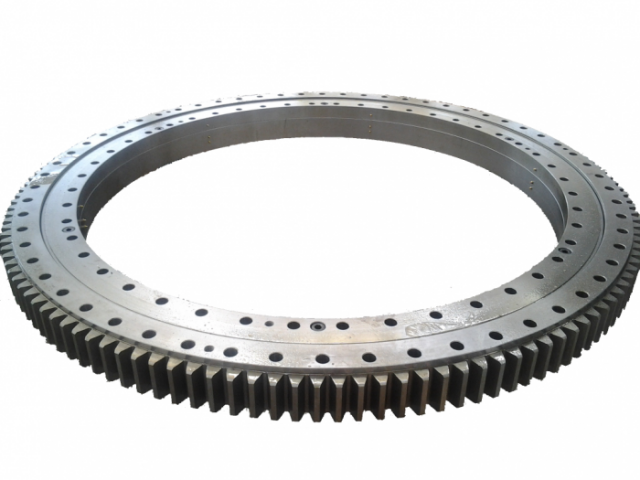
slewing ring Alt.

In order to ensure the normal use of the slewing ring bearing, the use and maintenance should be carried out in strict accordance with the “Installation and Operation Manual”. If there is a serious phenomenon of overturning and shaking during use, it must be stopped in time for inspection to prevent long-term sick operation to the slewing ring bearing. cause more damage.

2.What problems will affect the service life of the slewing ring?

Slewing ring is an important core component of equipment rotation. If the slewing bearing fails during the operation of the equipment and cannot rotate normally, it will cause equipment downtime and production paralysis.

It is generally very troublesome to replace the slewing ring, so everyone generally chooses a slewing bearing with reliable quality. The bearing is installed on its own equipment. After the slewing ring is installed, everyone hopes that the slewing bearing can work stably and reliably, and the longer the service life, the better. What are the factors that affect the life of the slewing bearing?

1. The problem of the equipment itself

1. The rigidity of the equipment installation foundation is insufficient. When the slewing ring is running under heavy load, the rigidity of the equipment installation foundation cannot provide a good support for the slewing ring, resulting in elastic deformation of the slewing bearing, uneven force when the slewing bearing rotates, and long-term use. It will cause damage to the slewing bearing and affect the service life.

2. The flatness of the installation foundation is not good. There will be a gap between the slewing ring and the installation foundation during installation. The correct way is to use a gasket with a suitable height to level the gap, but the operator often ignores this during installation and use. ,

In this case, the slewing bearing will warp and deform after the bolt is pressed, causing the channel to be deformed. After the deformation, the channel and the steel ball are not in good contact, and the clearance value is not uniform and the rotation is inflexible, which affects the use of the slewing bearing life.

2. Overload operation

When the slewing bearing is designed, the bearing capacity has been clarified, such as how much load and how much overturning moment it can bear. If the actual load exceeds the bearing capacity of the slewing bearing during use, it belongs to overload operation.

During overload operation, the load on the steel ball exceeds the limit load, and there will be collapse blocks, fatigue spalling, and craters in the raceway. The collapse will cause serious damage to the slewing ring.

It is possible that a short-term overload operation will cause devastating damage to the slewing bearing, which will seriously affect the service life of the slewing bearing, and overload operation may easily lead to safety accidents.

3. Pollution

Pollution can also lead to premature damage of the slewing bearing. Pollution means that dust particles, water, etc. enter the bearing raceway, or foreign matter enters the tooth meshing of the slewing ring. Damage to the slewing bearing, contaminants will also cause the slewing bearing to corrode, resulting in the deterioration of the grease, which will shorten the life of the slewing bearing.

4. Lubrication

The lubrication system can reduce the friction coefficient when the slewing bearing is running, achieve very small rolling friction or sliding friction, and also prevent the slewing bearing from rusting. Damaged teeth and lack of long-term lubrication are one of the main causes of premature failure of slewing ring bearings.

14 7 月, 2022

high quality china slewing ring

1.Slewing ring Installation

When you get LYMC slewing ring, please mount slewing ring as instructions below:
(1)Require the installation surface has sufficient strength and rigidity.
(2)Clean bearing and surface of the components, each surface can not have corrosion.
(3)The mounting surface should have locating pin or locating mouth, to prevent the bearing ran to each other.
(4)After contact with the mounting surface, you should check fit clearance with a feeler, the gap can be filled with plastic or a padded to prevent deformation of the bolt tightening.
(5)When installing, ensure that the bearing quenching soft belt should be located in the non-load bearing area or not often load area or load minimum area.
(6)Bearing mounting bolts must be of high strength bolts, according to the loading conditions, select the appropriate intensity level.
(7)Installation washer should adopt flat washer to ensure bearing pre load uniformly.
(8)Bolt preload requires sufficient strength, the preload force is 0.7 times to the bolt material yield limit. Best installed using a torque wrench to ensure uniform force and improve quality of the installation.
(9)Tighten bolts should adopt a “star” cross or symmetrical diagonal tightening way, first pretension and then follow the strength requirements and tighten the bolts.Tighten the bolts needs a torque wrench .
(10)For toothed products,must do the gear backlash detection before tighten the mounting bolts. To ensure the minimum or maximum diameter  (with logo) of the gear ring beating meet the design requirements (available 0.05 ~ 0.3mm feeler gauge calibration) .

Slewing ring installation related parameters requirements
(1)Mounting surface roughness is less than Ra12.5.
(2)The maximum allowable values of the installation surface flatness  can be determined according to actual working condition, but the flatness change must be uniform increasing or decreasing, within the scope of the circumference of a circle, not allowed to appear more than two (including two) peak, and 100 mm face runout is not allowed within the scope of more than 0.015 mm
(3)Maximum value on the radial direction inclination of the mounting surface is 0.04mm .
(4)Prestressing force of bolt installation must be determined according to the strength level of the bolt,the pre load force is 0.7 times to the bolt material yield limit.

requirements of slewing rings

Structures with slewing bearings normally require design types which are able to transmit all occurring loads with one bearing. These are normally axial, radial and tilting moments.These bearings must furthermore be suited to withstand the complete spectrum of operating conditions, as for example

• High and low temperatures including temperature fluctuations
• Overpressures and negative pressures
• Deformations of the companion structure
• Weight limits
• Limitation of the frictional torque
• Low maintenance
• Corrosion resistance
• Magnetoresistive behaviour
• Open center to run through supply lines or as access opening
Design and dimensioning
The bearings are individually designed and dimensioned for every application, this means that the buyer is not required to customize to specified geometries of catalogue bearings and characteristics but the bearing can be designed according to the customer’s structure and the specification.

slewing ring Alt.

2.Heat Treatment of Slewing ring Steel

Heat treatment of slewing bearing steel is to put solid metal or alloy into certain medium then undergoes three process: heating, heat preservation, and cooling to change steel organization and get required performance.

Different from other processing technology (such as forging, casting, welding, machining), purpose of heat treatment is not to change shape and dimension of steel but to change internal organization and performance of steel.

Heat treatment is alternately and repeatedly used among cold working, hot working, and other manufacturing process of mechanical parts or dies. According to its application, Heat treatment usually divided into pre-heat-treatment and final heat-treatment, and location of processing line as bellow :forging/casting→pre heat treatment→machinery (rough) processing →final heat treatment→mechanical (fine) processing.

Final heat treatment, such as quenching+tempering, etc, known as the heat treatment that enables the workpiece to meet the performance requirements under use condition. Pre heat treatment, such as annealing, normalization, known as the heat treatment that eliminates defects caused by former process or get organization and ready for subsequent machining and final heat treatment.

3.The correct storage method for slewing ring

Slewing rings are coated with anti-rust oil , and wrapped with a film in the factory. Such a package is usually valid for 3-6 months antirust.As long as the relative humidity does not exceed 60% of the storage compartment , the temperature changes within(20 ± 10), slewing ring general can store about a year (in the original packaging in good condition ) .

After long-term storage , grease lubricating properties of slewing bearings’ raceway filled may reduce.Before using the slewing bearing,they need to be filled with a new grease filling, storeroom should also avoid vibration and shaking.

For slewing rings ( turntable bearings ) not stored in their original packagings they should be kept well, to protect against corrosion and contamination .

For large slewing rings should be on flat, and inner and outer rings both should be supported. It should be stacked flat isolation between slewing rings.


12 7 月, 2022

best selling four-point contact ball slewing bearing

1.What factors are related to the service life of the four-point contact ball slewing bearing?

It is widely used in many construction machinery (such as excavators, etc.) or equipment platforms (such as drilling platforms, etc.).

Operators will consider its durability more when purchasing four-point contact ball slewing bearing, because slewing bearings have a longer service life, which can save costs and avoid affecting the production process due to maintenance or replacement of bearings.

Factors affecting the service life of four-point contact ball slewing bearing:
​​
1. Design Factors
​​

Whether the data of the four-point contact ball slewing bearing is compatible with the matching equipment during the design has a great relationship with the service life of the bearing.

For example, the diameter, number, effective length of rolling contact, radian and size of the contact surface of the bearing rolling element, etc.
​​
2. Material factors

​​For four-point contact ball slewing bearing to ensure reliable quality, material control is the foundation. Because the quality problem caused by the material itself is a flaw, it cannot be remedied by technology in the later stage.

Such as the martensite in the quenched steel, the impurities, gas, cracks in the steel during the bearing production process.
​​
3. Manufacturing process factors

​​During the manufacturing process of the four-point contact ball slewing bearing, due to technological or technical problems, the bearing parts hardness, surface burns, bumps and scratches, roughness, production accuracy, bearing clearance and other problems will affect its service life.
​​
4. Selection factors

​​The selection of the slewing bearing should be matched with the equipment, and the load, hardness, operating environment and other factors of the bearing should be emphasized to ensure that the bearing runs the bearing and avoid unnecessary damage to the bearing.

5. Assembly factor

The assembly factors of the four-point contact ball slewing bearing mainly include installation accuracy, selection of assembly tools, whether there are impurities mixed in the installation process, assembly position of parts, assembly clearance, lubricant selection and filling amount, etc.

Strictly assembling according to relevant standards can reduce the wear, overheating, noise and other phenomena of the bearing, which is also directly related to the running quality and service life of the bearing.
​​
6. Working environment and load

​​People work more efficiently in a comfortable environment. Long-term overloading will cause physical damage, and the same is true for machinery and equipment parts.

For the slewing bearing, the working temperature and the cleanliness of the working environment all affect the service life of the bearing; the bearing has its rated load during production, and if it is overloaded for a long time, its performance and service life will be adversely affected.

7. Maintenance

​​People say that “three points of use, seven points of nourishment” is actually very reasonable. Regular inspection and maintenance of slewing bearings, cleaning and lubrication can reduce bearing wear and prolong their service life.

four-point contact ball slewing bearing Alt.

2.What is the production process of four-point contact ball slewing bearing?

Production process of slewing bearing
​​
1. Steel raw material cutting
​​The raw material commonly used for slewing ring bearings is carbon-chromium bearing steel that is hardened as a whole, and the slewing ring is made of surface-hardened steel, generally made of 50Mn steel.

First, the billet should be cut according to the expected size of the bearing, and the carbide saw blade with high hardness, wear resistance, strength and toughness should be used for cutting bearing steel.
​​
2. Billet forging
​​The billet forging is to heat the billet in a heating furnace and forge it into a round cake shape. The purpose is to ensure the reliability and life of the bearing. After the raw material is forged, the bearing ring blank is formed.
​​

3. Forging ring
​​The steel billet is forged into a ring-shaped steel ring by using a ring rolling machine, and the internal structure of the steel can be improved by forging, so that the steel material has more strength, plasticity and impact toughness.
​​
4. Rough turning
​​Put the steel ring after the ring into the machine tool, carry out rough turning, turn out various groove raceways, fix the steel ring on the gear milling machine, cut the teeth, and provide conditions for the later grinding machine processing.

5. Heat treatment
​​Heat treatment is also called quenching.

Generally speaking, the heat treatment process is to carry out high temperature treatment on the bearing ring after forging and turning, which can affect the uniformity of carburization in the bearing ring and improve the wear resistance and hardness of the bearing.
​​
6. Drilling
​​When drilling the mounting hole on the end face of the steel ring, pay attention to the center and cutting angle before opening the hole. You can choose a drilling machine, a hand-held electric drill and a hand-operated drill for operation.
​​
7. Fine grinding
​​Fine grinding is to dress the fine parts of the bearing. Fine grinding can affect the rotation flexibility of the bearing and the machining accuracy of the bearing surface. The raceway surface of the steel ring is finely turned again to modify the deformation caused by the previous process.
​​
8. Assembly and packaging
​​Assemble the processed parts; the assembled finished bearings are coated with anti-rust oil, sampled for quality inspection, packaged and packaged, and then enter the storage or sales process.


11 7 月, 2022

slewing gear factory

1.Selection and Practical Application of Clearance of Precision Slewing Gears

The precision slewing gear can rotate smoothly to obtain an ideal runout value. Generally, when designing and manufacturing, the clearance value will choose small clearance, zero clearance, and negative clearance.

The corresponding clearance value is generally 0 to 0.05. ≤0, -0.05 to -0.01, the corresponding preloads are: no preload, light preload, and heavy preload.

During processing, we can measure the channel size according to the method of measuring the channel size of the slewing bearing, and calculate the clearance value (whether positive or negative) according to the measurement data, and then check the calculated clearance value after the processing is completed.

The positive clearance is directly measured with a dial indicator, and the negative clearance is used to measure the starting torque of the slewing gear. According to the size of the starting torque, the size of the interference of the slewing bearing is judged.

The starting torque is also a must know in the use of the slewing bearing. A value of , which determines the selection of slewing gear reducer and motor.

To measure the starting torque of the slewing bearing, it is necessary to measure the starting force of the slewing bearing first, and a dynamometer is required. Since the maximum starting force occurs at the moment when the slewing gear is about to rotate, a force measurement that can record the maximum value of the measurement is required. meter to measure the driving force of the slewing bearing.

Starting torque=starting force x lever arm, the starting force can be measured with a dynamometer, we generally install a bolt on the outer ring hole of the slewing bearing, and use a dynamometer to measure the starting force of the slewing drive at the bolt, and the distribution of the bolt holes in the outer ring The radius of the circle is the arm, and the starting torque of the slewing bearing is calculated from the starting force and the arm.

For the same slewing gear, the difference in starting torque can reflect the size of the clearance value of the negative clearance slewing bearing. The larger the starting torque, the smaller the clearance value and the greater the preload.

The selection of the clearance value should also consider the situation of the customer’s equipment. The smaller the clearance value of the slewing bearing, the higher the requirements for installation and use.

Due to the small deformation, the small deformation of the slewing bearing can be offset by the clearance when the clearance is large, and the slewing gear can rotate normally after installation, but if it is a small or negative clearance, the slewing gear has no extra clearance to resist the small deformation.

If the slewing bearing is deformed, it will be stuck, rotated poorly, or even stuck, resulting in damage or failure to use.

slewing gear

2.How to improve the tooth machining efficiency of the slewing gear?

The slewing ring bearing is a large bearing that operates at low speed and heavy load. Usually the inner ring or outer ring has teeth. It is used to connect large components that require relative rotation. It is widely used in automated industrial machinery, construction machinery, wind power equipment, port machinery and other fields. ,

In the whole cycle of the slewing bearing from the forging to the finished product until it is sent to the user, the tooth processing process takes up a lot of time, and the length of the delivery time depends to a large extent on the processing efficiency of the slewing gear teeth.

In recent years, due to the country’s strong investment in infrastructure, new energy equipment and other fields, the market demand for slewing ring bearings has also increased sharply, and the supply is often in short supply.

On the other hand, there are many domestic manufacturers of slewing ring bearings. Minimizing costs on the premise of quality is the key for enterprises to stand out in the fierce market competition.

Gear machining is the longest time-consuming process in the production process of slewing bearings, and it has always been one of the most important factors restricting the production efficiency of slewing bearings. The traditional slewing gear tooth machining usually has two methods: gear shaping and gear hobbing.

In order to adapt to the improvement of processing accuracy and production efficiency requirements, gear hobbing and gear shaping technology are constantly developing in the direction of full numerical control, high speed, high precision, and intelligence, but the processing efficiency has not yet reached the ideal state, especially the processing of internal teeth. Only the gear shaper can be used, the cutting amount of each feed is small, and the processing efficiency is low.

In recent years, a machining method of CNC high-speed tooth milling has been gradually promoted in the slewing gear industry. There are two types of internal teeth and external teeth, which are processed by the profiling principle.

with high processing efficiency and large feed amount, suitable for large diameter, large Modular slewing bearing processing, especially internal gear processing, is 5-8 times more efficient than traditional gear shaping, which greatly shortens the production cycle of slewing bearings.

Gear milling, gear hobbing, and gear shaping have their own advantages and disadvantages in terms of processing efficiency and equipment cost. In the case of sufficient market demand, the efficiency of gear milling is better than that of gear hobbing and gear shaping, and the cost of gear milling is also lower than that of gear hobbing and gear shaping.


8 7 月, 2022

slewing bearings suppliers factory

1.Why do not use elastic washers for the mounting bolts of the slewing bearing?

The installation and operation manual of the slewing ring bearing tells you that elastic washers cannot be used when installing the connecting bolts of the slewing bearing, so what effect will the elastic washer have on the slewing ring bearing? Why are elastic washers widely used in other mechanical equipment not used in slewing bearings?

First, we must first understand the function of the elastic washer. The elastic washer has a certain elasticity, which can prevent the bolts and nuts from loosening and falling off during the use of the equipment.

It is suitable for many mechanical equipment with vibration. However, the slewing ring bearing generally bears a large load, so the strength requirements of the bolts are relatively high. Usually, grade 10.9 bolts and nuts are used.

The high-strength bolt connection mainly relies on the frictional resistance between the bolt and the connected parts to achieve locking. Unlike ordinary bolts, which can be prevented from loosening by elastic washers, the use of thread tightening glue for the bolts of slewing bearings is the correct anti-loosening measure.

Second, the slewing bearing does not use elastic washers to prevent the deformation of the slewing bearing. The contact area of ​​the elastic washer is not as large as that of the flat washer.

Under the action of the large pre-tightening force, the flat washer is not reliable, and the larger pre-tightening force of the bolt may be It causes plastic deformation of the slewing ring bearing mounting surface in contact with the spring washer.

With the increase of use time, the deformation will become larger and larger, the pre-tightening force of the bolt will become smaller, and the bolt will loosen. The slewing bearing is usually subjected to overturning force.

The overturning force during operation will aggravate the plastic deformation of the slewing ring bearing mounting surface, and may also cause the elastic washer to open, resulting in rapid damage to the bolt and the slewing bearing.

Third, a suitable flat washer can increase the contact area between the bolt and the slewing bearing, preventing the plastic deformation of the contact surface of the slewing bearing when the bolt is pre-tightened by the workpiece with insufficient hardness.

Due to the increase in the contact area during the use of the slewing bearing Bolted connections maintain high reliability under overturning forces and shock loads.

Through the above analysis, we have come to the following conclusions: elastic washers cannot be used during the installation of slewing bearings, and suitable flat washers can be selected.

When installing the bolts, it is necessary to tighten the bolts according to the pre-tightening torque specified in the instruction manual. The use of thread tightening glue can prevent the bolts. loose.

slewing bearing Alt.

2.Technical analysis of raw material of slewing bearing (42CrMo)

The material of large-scale slewing bearing and high-precision slewing bearing ring is generally made of alloy structural steel 42CrMo, which has good mechanical properties, high strength and toughness, and has good fatigue resistance, impact resistance and low temperature impact toughness after modulation (Q+T).

42CrMo is usually quenched and tempered after rough machining. Through quenching and tempering, the ideal hardness of the ferrule can be obtained, and the comprehensive mechanical properties can be improved.

A reasonable modulation process can significantly improve the comprehensive mechanical properties and yield strength of the material, and give full play to the performance potential of the material. Guarantee the performance of the material during use and prolong the service life.

Modulation is the process of quenching + high temperature tempering, usually the quenched and tempered hardness of the slewing bearing is HB229-269.

The comprehensive mechanical properties of the modulated 42CrMo have been improved, and the hardness has also reached the standard requirements. The ferrule with the hardness of HB229-269 is relatively easy to machine the holes and teeth.

If the hardness exceeds HB300, the holes and teeth need to be processed. Special Processing method, the efficiency of conventional processing methods is too low, and wind power bearings usually require high hardness, in order to meet the requirements of low temperature impact energy.

42CrMo is suitable for surface quenching to achieve higher hardness, which can improve the bearing capacity and wear resistance, and can increase the service life of the slewing bearing.

In addition to the required hardness, the surface quenching must also reach the required hardened layer depth. If hardened If the layer depth is insufficient, the load-carrying capacity will be reduced and premature failure will occur.


4 7 月, 2022

ball bearing turntable made in china

1. Inspection of ball bearing parts

Check the appearance for bumps or rust spots, if there are serious bumps, rework, check the external dimensions, check whether the workpiece is consistent with the assembly drawings.

avoid missing processes after equipment and rework, carefully check the inner and outer ring raceways to find the soft belt, in the corresponding Mark S on the ball bearing plane, and find the number of grinding parts, and place the inner and outer rings with the same number accordingly.

2. Rust removal

If there are rust spots on the ball bearing parts, lightly rub with a scouring pad and cleaning agent for slight rust, and use an angle grinder to install a film for serious rust (except raceway).

3. Remove slewing bearing burrs and bumps

Pay attention to check the installation holes, oil holes, the chamfers of the inner and outer rings and the sealing grooves for burrs and bumps, and polish them with scouring pads or sandpaper.

4. Blocking and grinding requirements

Find the small end of the taper pin, take out the taper pin, and then use a puller to pull out the blockage, grind the edge of the blockage so that there are no burrs and sharp places, and grind it thoroughly to prevent abnormal noise from the ball bearing after assembly.

5. Clean the slewing bearing

Clean the workpiece, use compressed air to blow off the processing residues (fine iron grinding, grinding) on ​​the inner and outer rings of the ball bearing and in the mounting holes, then use kerosene or diesel to clean the workpiece, and then load it into the assembly area.

6. Slewing bearing with rolling elements

Use a wooden block to padded a ferrule with a blockage to make it fixed and cannot be rotated, and then insert another ferrule (the large one is suspended with a crane), so that the positions of the inner and outer ring channels are in a parallel state, and put in a few grains first.

The rolling elements are dispersed in a circle, support the non-clogging ferrule, and then rotate the non-clogging ring to install other rolling elements and spacers according to the number required in the drawing.

so that they are evenly distributed in the raceway, check the remaining gaps in the raceway, and use a thick Or thin spacer block to adjust the gap, the gap should not be larger than the length of one spacer block.

to prevent the ball bearing from being stuck due to the overturning of the spacer block, and then install the plug and taper pin, both ends of the taper pin should be lower than the plane.

7. Detection

Detect all drawing size requirements, detect whether the rotation is flexible, whether there is noise, axial clearance, radial clearance, end face runout, tooth runout, inner and outer diameter runout, finished product height, starting torque, etc.

8. Oil filling seal

After passing the test, put it into the grease nipple, then inject grease as required, install the seal and stick the interface, type, and finally demagnetize to check the appearance.

9. Packaging

The finished product is coated with anti-rust oil, first wrap the first layer with a transparent oil-repellent film, then wrap the second layer with kraft paper, and then wrap the third layer with plastic wrapping film or according to customer requirements, and finally label the product and pack it.

ball bearing Alt.

2.How to choose the clearance of ball bearing /gear slewing drive?

The clearance of the geared slewing drive refers to the clearance of the slewing bearing installed inside the geared slewing drive, so how to choose the clearance of the geared slewing drive?

Bearing clearance is the gap between the ball bearing rolling element and the inner and outer ring grooves of the bearing. Specifically, it is a finished ball bearing that is not installed and used.

Fix one of the outer or inner rings of the bearing, and then make the unfixed ring in the axial direction. Or radial movement, the movement of the unfixed ring is the clearance value of the bearing, and the clearance value of the bearing can be measured with a dial indicator and a magnetic meter seat. According to the different moving directions, the clearance is divided into axial clearance and radial clearance.

The axial movement of the ferrule is the axial clearance, and the radial movement of the ferrule is the radial clearance. The clearance when the bearing is running is called the working clearance.

The working clearance has an impact on the service life of the ball bearing, the temperature rise of the ball bearing, the vibration of the equipment and the noise of the equipment.

The clearance of the gear type rotary drive is generally divided into large clearance, small clearance and negative clearance, and different clearances are selected according to different working conditions.

1. The large clearance gear type rotary drive is generally used in the working conditions with low precision requirements, slow rotation speed, no overturning moment or small overturning moment. For example, many automation equipment only requires the gear-type slewing drive to provide the function of support and rotation.

The speed is very low, and it does not require precision and no eccentric load. The gear-type slewing drive with large clearance is very suitable for this working condition. Large clearance also has a great advantage.

If the customer’s installation foundation is difficult to machine and level, after the gear type rotary drive with small clearance is installed on the foundation, there may be a situation where the rotation resistance is large or cannot be rotated at all.

This phenomenon does not occur in the gear-type rotary drive with clearance, because the large clearance can resist the deformation of the gear-type rotary drive caused by the uneven foundation after installation, and the rotation is still flexible after installation.

2. The small clearance gear type rotary drive is generally used in the working conditions with high precision requirements, high speed and overturning moment. If the clearance is too large, it will affect the rotation accuracy of the ball bearing, which is not conducive to the stable operation of the equipment.

At high speed, the large clearance will cause the rotary drive to vibrate and generate noise. Especially when the high speed is installed vertically, a small clearance must be used. . Excessive clearance under the condition of overturning moment will cause unstable rotation and affect the normal use of the equipment.

Therefore, the precision requirements are high, the speed is fast, and the small clearance gear type rotary drive is suitable for the working condition with overturning moment.

3. Negative clearance gear type rotary drives are generally used in occasions with particularly high precision requirements. Under the working conditions with particularly high precision requirements, the clearance will not only affect the rotary accuracy, making the equipment unable to run smoothly, and will affect the transmission of the rotary drive.

Under the condition of high precision and large output torque, the clearance will directly affect the transmission accuracy of the teeth, increase the backlash of the teeth, and reduce the transmission accuracy. Negative clearance in high-precision applications can also keep the equipment accurate for a long time, reduce the frequency of equipment maintenance, and prolong the service life of the equipment.

The negative clearance gear slewing drive has very strict requirements on the installation foundation, and the installation foundation must be flat enough, otherwise the slewing drive will not rotate smoothly, get stuck, or even fail to rotate.


27 6 月, 2022

slewing bearings price

1.Why do not use elastic washers for the mounting bolts of the slewing bearing?

The installation and operation manual of the slewing ring bearing tells you that elastic washers cannot be used when installing the connecting bolts of the slewing bearing, so what effect will the elastic washer have on the slewing ring bearing? Why can’t elastic washers, which are widely used on other mechanical equipment, be used on slewing ring bearings?

First, we must first understand the function of the elastic washer. The elastic washer has a certain elasticity, which can prevent the bolts and nuts from loosening and falling off during the use of the equipment. It is suitable for many mechanical equipment with vibration. However, the slewing ring bearing generally bears a large load, so the strength requirements of the bolts are relatively high.

Usually, grade 10.9 bolts and nuts are used. The high-strength bolt connection mainly relies on the frictional resistance between the bolt and the connected parts to achieve locking. Unlike ordinary bolts, which can be prevented from loosening by elastic washers, the use of thread tightening glue for the bolts of slewing bearings is the correct anti-loosening measure.

Second, the slewing ring bearing does not use elastic washers to prevent the deformation of the slewing ring bearing. The contact area of the elastic washer is not as large as that of the flat washer, and it is not reliable under the action of the large pre-tightening force. The large pre-tightening force of the bolt may It causes plastic deformation of the slewing ring bearing mounting surface in contact with the spring washer.

With the increase of use time, the deformation will become larger and larger, the pre-tightening force of the bolt will become smaller, and the bolt will loosen. The slewing ring bearing is usually subjected to overturning force. The overturning force during operation will aggravate the plastic deformation of the slewing ring bearing mounting surface, and may also cause the elastic washer to open, resulting in rapid damage to the bolt and the slewing ring bearing.

Third, a suitable flat washer can increase the contact area between the bolt and the slewing ring bearing, preventing the plastic deformation of the contact surface of the slewing ring bearing when the bolt is pre-tightened by the workpiece with insufficient hardness. Due to the increase in the contact area during the use of the slewing ring bearing Bolted connections maintain high reliability under overturning forces and shock loads.

When installing the slewing ring bearing, elastic washers cannot be used. You can choose a suitable flat washer. When installing the bolts, you need to tighten the bolts according to the pre-tightening torque specified in the manual. Use thread tightening glue to prevent the bolts from loosening.

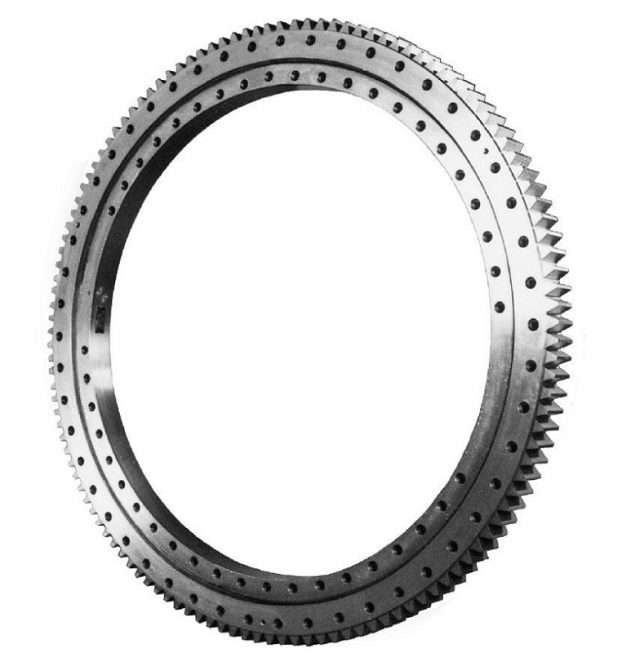
2.What problems will affect the service life of the slewing bearing?

Slewing ring bearing is an important core component of equipment rotation. If the slewing bearing fails during the operation of the equipment and cannot rotate normally, it will cause equipment downtime and production paralysis.

slewing bearing Alt.

It is generally very troublesome to replace the slewing bearing, so everyone generally chooses a slewing bearing with reliable quality. The bearing is installed on its own equipment. After the slewing bearing is installed, everyone hopes that the slewing bearing can work stably and reliably, and the longer the service life, the better. What are the factors that affect the life of the slewing bearing?

1. The problem of the equipment itself

1. The rigidity of the equipment installation foundation is insufficient. When the slewing ring bearing is running under heavy load, the rigidity of the equipment installation foundation cannot provide a good support for the slewing bearing, resulting in elastic deformation of the slewing ring bearing, uneven force when the slewing ring ring bearing rotates, and long-term use. It will cause damage to the slewing bearing and affect the service life.

2. The flatness of the installation foundation is not good. There will be a gap between the slewing ring bearing and the installation foundation during installation. The correct way is to use a gasket with a suitable height to level the gap, but the operator often ignores this during installation and use. ,

In this case, the slewing bearing will warp and deform after the bolt is pressed, causing the channel to be deformed. After the deformation, the channel and the steel ball are not in good contact, and the clearance value is not uniform and the rotation is inflexible, which affects the use of the slewing bearing. life.

2. Overload operation

When the slewing ring bearing is designed, the bearing capacity has been clarified, such as how much load and how much overturning moment it can bear. If the actual load exceeds the bearing capacity of the slewing bearing during use, it belongs to overload operation.

During overload operation, the load on the steel ball exceeds the limit load, and there will be collapse blocks, fatigue spalling, and craters in the raceway. The collapse will cause serious damage to the slewing bearing. It is possible that a short-term overload operation will cause devastating damage to the slewing ring bearing, which will seriously affect the service life of the slewing ring bearing, and overload operation may easily lead to safety accidents.

3. Pollution

Pollution can also lead to premature damage of the slewing ring bearing. Pollution means that dust particles, water, etc. enter the bearing raceway, or foreign matter enters the tooth meshing of the slewing bearing. Damage to the slewing bearing, contaminants will also cause the slewing bearing to corrode, resulting in the deterioration of the grease, which will shorten the life of the slewing bearing.

4. Lubrication

The lubrication system can reduce the friction coefficient when the slewing ring bearing is running, achieve very small rolling friction or sliding friction, and also prevent the slewing bearing from rusting. Damaged teeth and lack of long-term lubrication are one of the main causes of premature failure of slewing ring bearings.


22 6 月, 2022

slewing gear factory

1.Introduction and selection of grease used in slewing gear and slewing drive

We all know that when the slewing bearing and the slewing drive are used, they need to be regularly filled with grease, and they cannot be used without lubrication, otherwise the slewing gear and the slewing drive will be damaged. The slewing bearing and slewing drive products of Fuji Transmission have been filled with grease before leaving the factory.

We choose to use Mobilux EP2 grease. People who often buy grease know that there are many brands of grease on the market, and the quality is uneven. , Counterfeit grease is emerging in an endless stream, so you must buy grease from big brands through regular channels.

If you add counterfeit grease, it will also cause damage to the slewing gear slewing drive. Our Mobilux EP2 grease is produced by Mobil official website authorized dealers to buy, to ensure the quality of the grease.

Why did we choose Mobilux EP2 grease for slewing rings and slewing drives? Mobilux grease EP series grades 0, 1, 2, 3, 004, 023 are a series of high-performance greases, four of which are general-purpose industrial greases and two are special-purpose semi-fluid greases. These lithium hydroxystearate greases provide superior protection against wear, rust and water washout.

Mobilux EP Series greases 0, 1, 2, and 3 are suitable for most types of industrial applications, including heavy duty applications with high specific pressure or shock loads. These greases offer excellent resistance to rust and corrosion, as well as water washout, making them ideal for equipment that is often exposed to wet conditions.

1. Mobilux greases EP0 and 1 have good low temperature pumpability and are suitable for centralized lubrication systems and other applications requiring low temperature performance.

2. Mobilux EP2 and 3 are general-purpose greases, recommended for multi-purpose use of anti-friction bearings and plain bearings, bushings and pins under normal working conditions. The recommended application temperature is in the range of -20℃ to 130℃, but Higher temperatures can also be used if the frequency of grease addition is increased accordingly.

3. Mobilux grease EP004 and Mobilux grease EP023 are especially suitable for the lubrication of enclosed gears and bearings in gearboxes with poor sealing in underground mining machinery, except for motor drives, and are also suitable for many other applications due to wear and tear Or industrial applications where there is a lack of seals to hold common gear oils in the gearbox or chain case.

The recommended application temperature range for Mobilux EP004 is -25 to 120°C, and the recommended temperature range for Mobilux EP023 is -15 to 120°C.

Mobilux EP series greases have long been recognized as high performance, exhibiting good performance in corrosion protection, low temperature pumpability and high temperature service life, they have good ability to withstand loads and extreme pressures.

Reduce wear under heavy load or shock load and vibration load, good equipment reliability, high utilization rate, good anti-rust and anti-corrosion and anti-water wash performance, can protect equipment and provide good lubrication in the case of water ingress, prolong bearing Service life in wet environments, reducing bearing replacement costs and unplanned downtime.

slewing gear Alt.

2.Why do not use elastic washers for the mounting bolts of the slewing gear?

The installation and operation instructions of the slewing gear tell you that elastic washers cannot be used when installing the connecting bolts of the slewing gear, so what effect will the elastic washer have on the slewing bearing? Why can’t elastic washers, which are widely used on other mechanical equipment, be used on slewing bearings? Let’s take a look at why.

First, we must first understand the function of the elastic washer. The elastic washer has a certain elasticity, which can prevent the bolts and nuts from loosening and falling off during the use of the equipment. It is suitable for many mechanical equipment with vibration. However, the slewing gear generally bears a large load, so the strength requirements of the bolts are relatively high.

Usually, grade 10.9 bolts and nuts are used. The high-strength bolt connection mainly relies on the frictional resistance between the bolt and the connected parts to achieve locking. Unlike ordinary bolts, which can be prevented from loosening by elastic washers, the use of thread tightening glue for the bolts of slewing bearings is the correct anti-loosening measure.

Second, the slewing bearing does not use elastic washers to prevent the deformation of the slewing gear. The contact area of ​​the elastic washer is not as large as that of the flat washer. Under the action of the large pre-tightening force, the flat washer is not reliable, and the larger pre-tightening force of the bolt may be It causes plastic deformation of the slewing bearing mounting surface in contact with the spring washer.

With the increase of use time, the deformation will become larger and larger, the pre-tightening force of the bolt will become smaller, and the bolt will loosen. The slewing bearing is usually subjected to overturning force. The overturning force during operation will aggravate the plastic deformation of the slewing gear mounting surface, and may also cause the elastic washer to open, resulting in rapid damage to the bolt and the slewing bearing.

Third, a suitable flat washer can increase the contact area between the bolt and the slewing bearing, preventing the plastic deformation of the contact surface of the slewing bearing when the bolt is pre-tightened by the workpiece with insufficient hardness. Due to the increase in the contact area during the use of the slewing bearing Bolted connections maintain high reliability under overturning forces and shock loads.

Through the above analysis, we have come to the following conclusions: elastic washers cannot be used during the installation of the slewing bearing, and a suitable flat washer can be selected. When installing the bolts, it is necessary to tighten the bolts according to the pre-tightening torque specified in the manual. The use of thread tightening glue can prevent the bolts. loose.


20 6 月, 2022

in stock slewing bearings suppliers

1.Why do slewing bearings need to grind their teeth? Cause Analysis

With the continuous development of industrial machinery, there are higher and higher requirements for the transmission stability, transmission accuracy and bearing capacity of the motor-driven pinion and the slewing ring gear. Regarding the slewing bearing, whether it is external or internal, the normal process includes gear shaping, gear hobbing, and milling.

According to the design standard, the general gear accuracy is grade 8 or grade 9. Rough insertion and fine insertion can reach grade 7 tooth precision. The tooth precision is mainly reflected in the rotation precision. Specific indicators:

1. Cross pitch and common normal length

2. Common normal deviation

3. Tooth jump (tooth jump of finished turntable bearing)

4. Tooth width, tooth thickness, tooth shape and tooth direction, etc. (generally not marked in the drawing)

In order to improve the strength, hardness, wear resistance and toughness of the ring gear and gear, we usually use surface quenching on the teeth of the ring gear when machining the slewing bearing teeth. Easily damaged, etc. Tooth quenching has a great influence on the tooth accuracy.

After quenching, the ring gear will appear elliptical deformation, and the accuracy level will decrease. If the tooth accuracy requirements are high, the design requirements are usually not met after quenching.

If you want to achieve higher tooth accuracy after quenching, you need to Finishing the teeth, but the hardness of the teeth after quenching is high, and the conventional gear shaping or gear hobbing process cannot process the quenched teeth.

We usually use the grinding process. What is grinding? The grinding wheel is used as a tool to grind the processed gear tooth surface to improve the gear precision and surface roughness. It is suitable for steel gears with high hardness after quenching.

Grinding teeth can achieve high surface roughness, and the quenched teeth can reach Ra0.8 surface roughness through grinding, and the tooth jump can reach 0.03-0.1mm. Grinding can correct the deformation of the gear during the heat treatment process, ensure the accuracy of the finished gear, improve the meshing accuracy, achieve the purpose of precise transmission, and reduce vibration and noise.

slewing rings Alt.

2.How to improve the tooth machining efficiency of the slewing bearing?

The slewing ring bearing is a large bearing that operates at low speed and heavy load. Usually the inner ring or outer ring has teeth. It is used to connect large components that require relative rotation. It is widely used in automated industrial machinery, construction machinery, wind power equipment, port machinery and other fields. ,

In the whole cycle of the slewing bearing from the forging to the finished product until it is sent to the user, the tooth processing process takes up a lot of time, and the length of the delivery time depends to a large extent on the processing efficiency of the slewing bearing teeth.

In recent years, due to the country’s strong investment in infrastructure, new energy equipment and other fields, the market demand for slewing ring bearings has also increased sharply, and the supply is often in short supply. On the other hand, there are many domestic manufacturers of slewing ring bearings. Minimizing costs on the premise of quality is the key for enterprises to stand out in the fierce market competition.

Gear machining is the longest time-consuming process in the production process of slewing bearings, and it has always been one of the most important factors restricting the production efficiency of slewing bearings.

The traditional slewing bearing tooth machining usually has two methods: gear shaping and gear hobbing. In order to adapt to the improvement of processing accuracy and production efficiency requirements, gear hobbing and gear shaping technology are constantly developing in the direction of full numerical control, high speed, high precision, and intelligence, but the processing efficiency has not yet reached the ideal state, especially the processing of internal teeth. Only the gear shaper can be used, the cutting amount of each feed is small, and the processing efficiency is low.

In recent years, a machining method of CNC high-speed tooth milling has been gradually promoted in the slewing bearing industry. There are two types of internal teeth and external teeth, which are processed by the profiling principle, with high processing efficiency and large feed amount.

It is suitable for large diameter, large Modular slewing bearing processing, especially internal gear processing, is 5-8 times more efficient than traditional gear shaping, which greatly shortens the production cycle of slewing bearings.

Gear milling, gear hobbing, and gear shaping have their own advantages and disadvantages in terms of processing efficiency and equipment cost. In the case of sufficient market demand, the efficiency of gear milling is better than that of gear hobbing and gear shaping, and the cost of gear milling is also lower than that of gear hobbing and gear shaping.


17 6 月, 2022

China Popular Wholesales Double Row Ball Slewing Bearing

1.Double row ball slewing bearing

Slewing ring bearings have unique bearing characteristics and are usually used in hoisting machinery, excavators, turntables, wind turbines, and other equipment. Most of the slewing bearings below three meters have a four-point ball structure, and the size of the load determines the height of the slewing ring, Diameter and size of channel steel balls.

If a large-load slewing bearing is required but the diameter is limited, the bearing capacity of the slewing bearing can generally be improved by increasing the steel ball. If the bearing capacity is still not met by increasing the steel ball, the structure of the double row ball slewing bearing can be adopted.

The slewing bearing satisfies the limited outer diameter size, but also requires a large load, which not only saves materials, but also improves the performance of the slewing bearing, so that the slewing bearing has greater axial radial load and tipping moment.

double row ball slewing bearing Alt.

So how does the double row ball ball slewing bearing channel ensure the accuracy and mutual difference?

The channels of double row ball slewing bearings are divided into plane channels and arc channels, among which the channels of four-point contact ball bearings and double-row ball bearings are typical arc channels; the channels of crossed roller and three-row roller bearings are is a typical planar channel.

In terms of processing technology, the processing difficulty of circular arc channels is greater than that of flat channels, so there are naturally higher requirements for precision level and parameter control of actual processing.

Especially for the double row ball slewing bearing, the channel is two parallel arcs. In theory, the two rows of balls are subjected to force and run at the same time during the rotation process, but the probability of absolute simultaneous force and simultaneous operation is very low. exist on.

During the machining process, a certain error is allowed in the double-row ball channel. This error is not enough to affect the overall operating state of the slewing bearing.

This mutual difference is generally required to be within 0.03mm in the process. In order to achieve this goal, in the process of bearing grinding and matching, the machine tool needs to have good precision, and the workers need to have a skilled operation level.

If you want to achieve zero or negative double-ball clearance, the difference needs to be controlled within 0.01mm. Inside, for the double row ball slewing bearing, only by controlling the mutual difference between the channels can the slewing bearing exert its theoretical bearing capacity and its characteristics.

2.Double row ball slewing bearing

The LYMC double-row ball slewing bearing can carry axial load, tilting moment and radial loads at the same time. The top ball mainly carries the axial load and positive tilting moment. The drop ball takes the opposite tilting moment. This is the reason for the loading capacity of the double row ball slewing bearing being larger than the four-point contact ball slewing bearing; however, the frictional ratio is much larger. than the latter.

The LYMC double row ball slewing bearing consists of a inner ring, outer ring, balls in double rows, spacers, sealing device, and other components. Due to the top ball mainly taking the axial load and tilting moment loads, the size of top balls are larger than the drop ball. In order to accommodate the various working condition at different axial load, tilting moments and axial load, the angle of contact would be adjusted accordingly.

The rings structure can be divided into two types, integral type and split type. Generally, the integral type maintains a stronger rigidity. The split type is more convenient to adjust; the two segregate rings are fastened by bolts prior to delivery. The LYMC double row slewing bearing has cages (or spacing blocks) among the balls. Only when large loading is requested would the full ball type be applied. Loading capacity for full ball type is definitely larger.

However, the increased friction generated by this design allows for the balls to be easily scratched. The double row slewing bearing is mainly for the working conditions when carrying an axial load, larger tilting moment, and where the mounting place is limited in radial direction. This structure provides good performance when fit into an installation when an amount of deformation may be allowed.


About us

Headquarters

Luoyang MC Bearing Technology Co.,Ltd (LYMC)
+86 13837949030

www.chinaslewingbearings.com/

[email protected]

LOCATIONS

We are everywhere


GET IN TOUCH

Follow our activity

LYMC bearings are the perfect alternative to the most common and well-known brands.