user02, Author at Slewing Ring Bearings Manufacturers Suppliers Exporters - 第7页 共13页


19 4 月, 2022

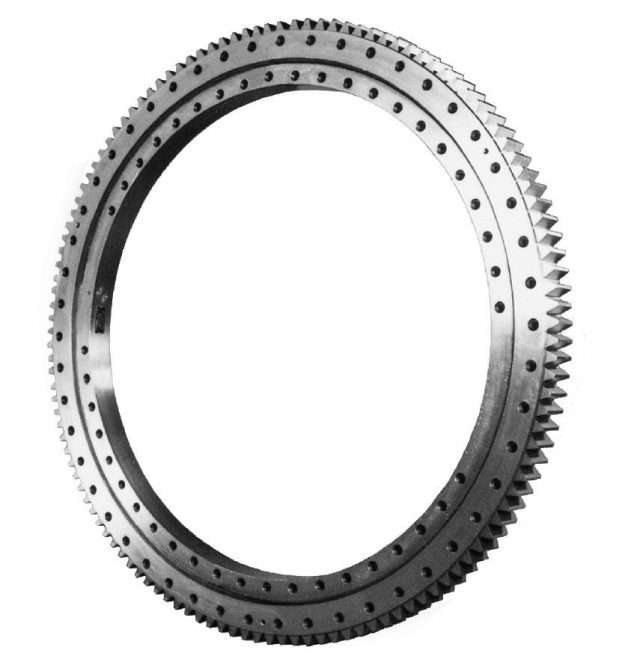
in stock cross roller slewing ring

1.Causes and preventive measures of shaking during operation of slewing ring

1. The reason for the jitter of the slewing bearing during operation

1. Internal machining accuracy of slewing bearing

The machining accuracy of the steel ball inside the slewing ring and the machining accuracy of the inner raceway are not high, or there are quality defects and the lack of lubricating oil in the raceway. When the slewing bearing is defective, sometimes the frequency of failure can be reduced by replacing the steel ball.

2. The machining of gears is not precise enough

The gear accuracy grade of the slewing ring should be between 7 and 11, which determines the stability of the slewing ring transmission, the uniformity of the load distribution and the transmission accuracy. The higher the gear precision, the denser the contact spots on the meshing tooth surface, so that the noise value is reduced and the operation stability is improved.

3. Welding defects of upper and lower supports

If the welding quality is not up to standard, it is necessary to repair and repair the weld defects. During repair welding, it will not only generate new welding stress, but also have a great impact on the flatness of the machined mounting surface.

At the same time, the current generated by welding will also cause certain damage to the internal rolling elements and raceways when passing through the slewing bearing. damage. In addition, if the assembly error generated in the manufacturing and assembly, the threading of the pin shaft and the pre-tightening of the bolts in the field installation do not meet the specified requirements, abnormal noise or vibration will also occur.

4. Quality problems of gears and starting motors

Due to the long working time of the gear under load, small pieces of metal or strip-shaped metal iron filings will appear near the pitch line of the tooth surface, resulting in pitting or gnawing.

The pitting corrosion of the tooth surface continues to expand with the increase of working time, so that the meshing tooth profile is damaged, the noise and impact during rotation increase, and the metal particles impacted repeatedly accelerate the wear of the tooth surface, forming a vicious circle.

In addition, the manufacturing and assembly of the starter motor in the slewing mechanism has its own defects, which produce shock jitter, and the meshing process between the drive wheel and the support is unstable, which also increases the frequency of jitter and the decibel of abnormal noise.

slewing ring Alt.

2. Preventive measures for slewing bearing jitter

1. Installation and operation

High-strength bolts should be used to install the slewing ring, and the bolts and nuts should meet the requirements of GB3098.1 and GB3098.2 standards. Spring washers are prohibited. Before the installation bolts are tightened, the meshing adjustment (backlash) of the large and small gears must be carried out, and the meshing of the slewing bearing and the pinion should be ensured to meet the requirements.

Tighten the mounting bolts at 180°, the mounting plane must be clean and flat, and there must be no burrs, iron filings and other debris, and the plane must meet the following requirements: the slewing bearing often has broken teeth during operation, so it is also The influence of wind on the slewing bearing should be taken into account.

If the jib cannot rotate freely with the wind after the operation exceeds the specified wind force or stops the operation, it may damage the gear meshing with the bearing or the slewing bearing, and a serious safety accident will occur. Therefore, detailed inspection should be done during installation and operation.

2. Fastening bolts

The connecting bolts of the slewing bearing and the upper and lower supports are subjected to axial pulsating load in addition to the pre-tightening force, which will cause the bolt to be elongated or the connecting surface to deform, making the bolt loose.

If the loosening pre-tightening force of the bolt connection fails to meet the requirements, the axial clearance will increase, the rolling elements will be rotated by a large overturning moment, and the edge of the raceway will be subjected to huge contact stress, which will cause the edge of the raceway to be damaged.

Therefore, it is necessary to regularly check the tightening of the slewing bearing bolts to make them reach the specified pre-tightening force, which is generally 400-500 N.m.

3. Internal lubrication of slewing ring

In daily use, each component should be lubricated according to the lubricant, lubrication method and lubrication cycle regulations in time and on time according to the instruction manual. The corresponding ball slewing bearing is generally refilled every 100 hours of operation, and the roller slewing bearing is filled every 50 hours.

For special working environments with a lot of dust, high humidity and high temperature difference, the lubrication cycle should be shortened. The raceway must be filled with each lubrication until the lubricating oil seeps out, and the slewing bearing needs to be slowly rotated to make the grease evenly filled while filling.

By adding lubricating oil for maintenance, the friction between the gear pairs can be reduced, the wear speed of the gear ring can be slowed down, and the formed oil film can also act as a shock absorber to eliminate part of the vibration energy generated during operation. In addition, the lubricating oil film can also lubricate and clean each friction surface well, prevent rust, and eliminate the influence of iron filings on the friction surface. Thereby reducing the friction noise of the operation and increasing the service life of the bearing.


18 4 月, 2022

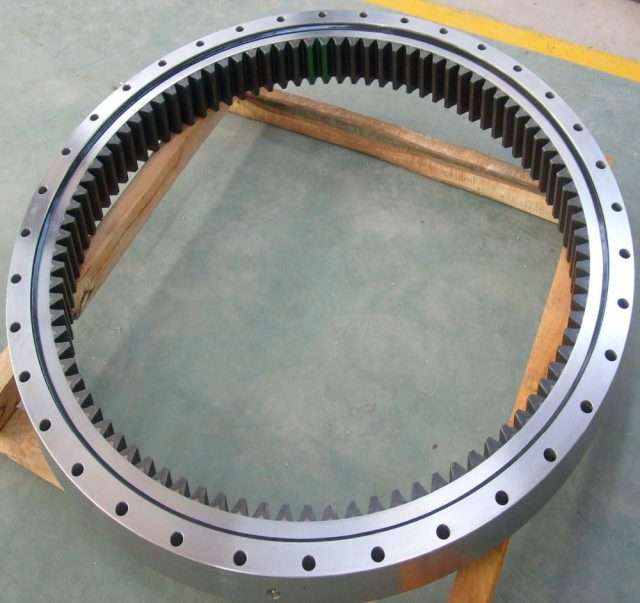
high quality slew bearing factory

1.Cold treatment process and function of slew bearing

First, the role of cold treatment
​​
Precision slew bearings have high requirements for dimensional stability; after quenching of the slew bearing (especially staged quenching), the internal structure still retains a lot of retained austenite. This retained austenite is an unstable structure.

During the process, changes will continue to occur, thereby changing the accuracy of the bearing. For this reason, a cold treatment process is used, which can reduce the retained austenite in the structure and slightly increase the hardness of the part.

2. Cold treatment process and requirements

1. Stay at room temperature after quenching: After quenching, be sure to cool the inside and outside of the ferrule evenly to room temperature before cold treatment, otherwise it is easy to crack, and immediately after cooling to room temperature (generally no more than 30min), otherwise it will stop the austenite to the horse. The transformation of the body.

2. Cold treatment temperature: The temperature of cold treatment is mainly based on the martensite transformation termination temperature Mf of the steel, and the influence of cold treatment on mechanical properties and manufacturability should also be considered.

For GCr15 steel, use -70℃ for cold treatment; when there are restrictions on ferrules or equipment with low precision requirements, the cold treatment temperature can be selected as -40~-70℃; for super precision bearings, the temperature can be between -70℃~-80℃ Cold treatment in between. Subcooled temperatures affect slew bearing impact fatigue and contact life.

3. Cold treatment and heat preservation: Although the transformation of a large amount of martensite is completed when it is cooled to a certain temperature, in order to make the surface and core of a batch of ferrules reach the cold treatment temperature evenly, a certain heat preservation time is required, generally 1 to 1.5 h.

4. Tempering after cold treatment: The ferrule is placed in the air after cold treatment, and its temperature is slowly raised to room temperature and then tempered in time. The temperature rise cannot be too fast, otherwise it is easy to crack; if the tempering is timely, otherwise the large residual stress inside the ferrule will cause the ferrule to crack, generally not more than 2h.

slew bearing Alt.

2.What are the factors that affect the fatigue life of slew bearing steel?

1. The effect of nitrides on fatigue life
​​
Some scholars have pointed out that when nitrogen is added to the steel, the volume fraction of nitrides decreases. This is due to the reduction in the average size of the inclusions in the steel. Limited by technology, there are still a considerable number of inclusion particles smaller than 0.2 in. counted.

It is precisely the existence of these tiny nitride particles that has a direct impact on the fatigue life of slew bearing steel. Ti is one of the elements that form nitrides. It has a small specific gravity and is easy to float. There will also be a part of Ti left in the steel to form multi-angular inclusions.

Such inclusions are likely to cause local stress concentration and fatigue cracks, so it is necessary to control the occurrence of such inclusions.

2. The effect of oxides on fatigue life

The oxygen content in steel is an important factor affecting the material. The lower the oxygen content, the higher the purity and the longer the corresponding rated life. The oxygen content in steel is closely related to oxides. During the solidification process of molten steel, the dissolved oxygen of aluminum, calcium, silicon and other elements forms oxides.

The oxide inclusion content is a function of oxygen. As the oxygen content decreases, the oxide inclusions will decrease; the nitrogen content is the same as the oxygen content, and also has a functional relationship with the nitride, but because the oxide is more dispersed in the steel, it acts as a fulcrum with the same function as the carbide. , so it has no destructive effect on the fatigue life of steel.

Due to the existence of oxides, steel destroys the continuity of the metal matrix, and because the expansion coefficient of oxides is smaller than the expansion coefficient of the slew bearing steel matrix, when subjected to alternating stress, it is easy to generate stress concentration and become the origin of metal fatigue.

Most of the stress concentration occurs between oxides, point inclusions and the matrix. When the stress reaches a sufficient level, cracks will occur, which will rapidly expand and destroy. The lower the plasticity of the inclusions and the sharper the shape, the greater the stress concentration.

3. The effect of sulfide on fatigue life

Almost all of the sulfur content in steel exists in the form of sulfides. When the sulfur content in the steel increases, the sulfide in the steel increases accordingly, but because the sulfide can be well surrounded by the oxide, the influence of the oxide on the fatigue life is reduced, so the number of inclusions has no effect on the fatigue life.

Certainly, it is related to the nature, size and distribution of inclusions. The more inclusions, the lower the fatigue life must be, and other influencing factors must be considered comprehensively.

In bearing steel, sulfides are dispersed and distributed in a fine shape, and are mixed with oxide inclusions, which are difficult to identify even by metallographic methods.

Experiments have confirmed that on the basis of the original process, increasing the amount of Al has a positive effect on reducing oxides and sulfides.

This is because Ca has a fairly strong desulfurization ability. Inclusions have little effect on the strength, but are more harmful to the toughness of the steel, and the degree of damage depends on the strength of the steel.


15 4 月, 2022

in stock cross roller slewing ring

1.Cross Roller Slewing Ring

Cross roller Slewing rings and turntable bearings can accommodate axial, radial and moment loads. They are not housed or mounted on a shaft, but are instead mounted directly to a seating surface. The inner and outer rings are supplied with mounting holes and often include internal or external gears.

There are several basic types of products. Single-row slewing rings and turntable bearings feature a single row of balls, a standard bearing raceway, and four points of contact between the balls and raceway. Double-row products feature two rows of ball bearings, two raceways, and eight points of contacts for each ball.

Slewing rings and turntable rings with three independent rows of rollers are also available. Cross rollers have a single row of rollers with the axes of alternating, adjacent rollers at right angles to one another. Cross roller Slewing ring and turntable bearings with a single row of balls and a single row of rollers are designed for small radial runout and high thrust roads.

Typically, inserted raceways are made of wire and use either a ball or roller as the contact element.

Cross roller Slewing ring and turntable bearings vary in terms of physical dimensions and operating specifications. Bore size, outside diameter and overall width are the most important physical dimensions to consider. Metric bores are measured in millimeters (mm) and specified according to a standard numbering system that ranges from 00 (10 mm) to 20 (100 mm).

Bore sizes 00, 01, 02, and 03 are 10 mm, 12 mm, 15 mm, and 17 mm, respectively. For bore sizes 04 and up, multiplying the bore size by 5 yields the bore diameter. Slewing rings and turntable bearings that are measured in inches (in) or fractions of an inch are also available.

For flanged bearings, the outside diameter excludes the size of the flange. Overall width includes the size of the locking collar, if present. In terms of operating specifications, the most important measurements to consider are static axial or thrust load, static radial load, and moment load. Typically, these specifications are measured in pounds (lbs) or feet-pounds (ft-lbs).

Single-row four point contact ball slewing bearing is generally composed of two rings, compact, light weight, and circular raceway ball four point contact, can withstand the axial force, radial force and overturning moment, according to the customer You can use different occasions were selected ring, install and easy to use with an internal or external gear teeth.

Rotary conveyors, welding operation machine, small cranes and excavators and other construction machinery can be selected

2.What is a crossed roller bearing

The single row crossed roller bearing is composed of two seat rings, which design in compact structure and light weight; this single row crossed roller type slewing bearing has the steel roller for the rolling element, not for the steel ball.

As the rollers are 1:1cross arranged, it is suitable for high precision mounting and capable to bear axial force, resultant moment and considerable large radial force. The axial and radial clearance is smaller than single row ball slewing bearing. The rotating is not so flexible as the one row ball bearings, usually it use for some higher precision applications.

Our single row crossed roller slewing bearing ring’s axial and radial clearance’s precision is high.

Single row crossed roller ring bearings are mainly made of 50 Mn, 42CrMo and C45.

The single row crossed roller bearing has been widely used in many applications:

cross roller slewing ring Alt.

1. Military product

2. Automation machinery, Robots

3. Medical equipment

4. Radar equipment

5. Tank

6. Grinding machine and drilling machine.

Cross roller slewing bearings are primarily used when a single row ball slewing bearing does not meet operating performance requirements for high stiffness, high precision, as well as rotation torque.

The clearance is usually smaller than single row ball slewing bearing, from 0-0.03mm (preload). Because the rollers are 1:1 cross arranged, this compact structure is capable to bear axial force, tilting moment and much more radial force.


13 4 月, 2022

china wholesale slewing gear factory

1.Are bearing inner rings interchangeable? Can old and new slewing gear be mixed?

Are bearing inner rings interchangeable? When replacing old slewing gears, some manufacturers find that the reasons for the damage and failure of bearing accessories are different, and they want to know if the inner ring of the bearing is damaged, can the inner ring accessories of another bearing be replaced for combined use, and want to extend the bearing life in this way.

The frequency of use reduces the cost of replacing the bearing, but it is also worried that it will affect the service life of the bearing.

1. Can the inner ring of the slewing gear be interchanged?
​​
The inner ring of the slewing gear is interchangeable. In fact, as long as it is the same type of slewing gear or the bearing inner ring with the same bearing suffix, it can be exchanged. In this case, do not replace the bearing’s outer ring type suffix.

The two types of slewing gears are different, so they cannot be replaced. If If it is found that the inner ring of the same model is mixed, it will not affect the quality and life of the bearing after assembly.
​​
Some bearings fail due to various reasons, and some parts of the bearing are in good condition. At this time, it is possible to remove the outer ring of the bearing for use. However, some slewing gears themselves have bearings without an outer ring, and the inner ring of the bearing cannot be taken out independently. ,

At this time, it is recommended that customers do not blindly remove the outer ring to use, so as to waste the cost of an outer ring and increase itself. Replacement should be tried according to the specific conditions of the bearing.

2. Can old and new slewing gear be mixed?
​​
For worrying about whether the operation of using old slewing gear parts to assemble new bearing parts will affect the service life or performance of the bearing, in fact, this also needs to be analyzed in detail. If there are no problems such as wear and deformation of the parts, the new and old bearing parts are suitable for use.

In the case of matching, it can be mixed. However, if the clearances of some accessories are different or do not fit, it is not recommended to mix them, and there may be poor operation or other wear and noise conditions that affect the normal operation of the slewing gear.

However, if the spare parts are of the same type, and there is no wear deformation or other faults after inspection, then the old and new bearings can be mixed.

slewing gear Alt.

2.What are the factors that affect the fatigue life of bearing steel?

Factors Affecting Fatigue Life of Bearing Steel
​​
1. The effect of nitrides on fatigue life
​​
Some scholars have pointed out that when nitrogen is added to the steel, the volume fraction of nitrides decreases. This is due to the reduction in the average size of the inclusions in the steel. Limited by technology, there are still a considerable number of inclusion particles smaller than 0.2 in. counted.

It is precisely the existence of these tiny nitride particles that has a direct impact on the fatigue life of slewing gear steel. Ti is one of the elements that form nitrides. It has a small specific gravity and is easy to float. There will also be a part of Ti left in the steel to form multi-angular inclusions.

Such inclusions are likely to cause local stress concentration and fatigue cracks, so it is necessary to control the occurrence of such inclusions.

2. The effect of oxides on fatigue life
​​
The oxygen content in the steel is an important factor affecting the material. The lower the oxygen content, the higher the purity and the longer the corresponding rated life. There is a close relationship between the oxygen content in steel and oxides.

During the solidification process of molten steel, the dissolved oxygen of aluminum, calcium, silicon and other elements forms oxides. The oxide inclusion content is a function of oxygen.

As the oxygen content decreases, the oxide inclusions will decrease; the nitrogen content is the same as the oxygen content, and also has a functional relationship with the nitride, but because the oxide is more dispersed in the steel, it plays the same role as the carbide. , so it has no destructive effect on the fatigue life of steel.
​​
Due to the existence of oxides, steel destroys the continuity of the metal matrix, and because the expansion coefficient of oxides is smaller than the expansion coefficient of the bearing steel matrix, when subjected to alternating stress, it is easy to generate stress concentration and become the origin of metal fatigue.

Most of the stress concentration occurs between oxides, point inclusions and the matrix. When the stress reaches a large enough value, cracks will occur, which will rapidly expand and destroy. The lower the plasticity of the inclusions and the sharper the shape, the greater the stress concentration.
​​
3. The effect of sulfide on fatigue life
​​
Almost all of the sulfur content in steel exists in the form of sulfides. When the sulfur content in the steel increases, the sulfide in the steel increases accordingly, but because the sulfide can be well surrounded by the oxide, the influence of the oxide on the fatigue life is reduced, so the number of inclusions has no effect on the fatigue life.

Certainly, it is related to the nature, size and distribution of inclusions. The more inclusions, the lower the fatigue life must be, and other influencing factors must be considered comprehensively. In bearing steel, sulfides are dispersed and distributed in a fine shape, and are mixed with oxide inclusions, which are difficult to identify even by metallographic methods.

Experiments have confirmed that, on the basis of the original process, increasing the amount of Al has a positive effect on reducing oxides and sulfides. This is because Ca has a fairly strong desulfurization ability. Inclusions have little effect on the strength, but are more harmful to the toughness of the steel, and the degree of damage depends on the strength of the steel.


12 4 月, 2022

best selling slewing bearing in stock

1.How does slewing bearing paint rust form? How to prevent?

Bearing paint rust often occurs in slewing bearings installed in closed equipment, generally manifested as rust inside the bearing and a strong paint smell.

Slewing Bearing paint rust is a frequent problem, which may affect the normal rotation and service life of the bearing. So how does bearing paint rust form, and how to prevent it every day?

First, the cause of the formation of bearing paint rust
​​
Generally, the bearing with paint rust is generally on the end face near the inner side of the motor, and will be seriously rusted. The grease near the edge of the inner and outer rings will first deteriorate, generally yellowish brown.

The reason for the formation of bearing paint rust refers to the fact that during the slewing bearing paint rust test, it was found that the severity of bearing paint rust was closely related to the humidity. Most of the paint rust occurs in the south or the coast to coincide with the imagination of the annual rainy season.
​​
1. The climate environment is high temperature and high humidity.
​​
2. The stator drying is incomplete;
​​
3. Motor bearings are sealed and packaged in storage;
​​
4. The severity of paint rust mainly depends on the composition of the paint base.
​​
5. Prevention of paint rust (bearing seal and rust prevention, type of grease).

Second, the prevention method of bearing paint rust
​​
The prevention of bearing paint rust must be considered in terms of its mechanism, from the design and manufacture of motors, insulation and slewing bearings. We organize the preventive measures as follows:
​​
1. Avoid complete sealing and open air holes as much as possible;
​​
2. The manufacture of traditional Chinese medicine must ensure the drying time of insulating paint. After the stator is dried, it should be placed in a ventilated place for natural ventilation, so that the paint gas can be completely released. The stator should follow the principle of first-in, first-out during use.
​​
3. During the storage process of the warehouse, it is not close to the walls and corners, and pallets are used on the ground to ensure ventilation, and the humidity should be less than 70%RH as much as possible.
​​
4. Use stable insulating varnishes (such as epoxy solvent-free insulating varnishes) that do not escape low molecular acid, and produce them in strict accordance with the production process requirements.
​​
5. When selecting grease, use mineral oil as the base oil.
​​
6. Sealed bearings are used.

slewing bearing Alt.

2.What are the heat treatment processes for slewing bearings? Introduction of normalizing, annealing, quenching and tempering

1. Slewing Bearing heat treatment process
​​
1. Quenching: Quenching is to heat the metal above the critical point. At this time, the internal structure and state of the metal will change – austenitization. At this time, it needs to be kept for a certain period of time to allow the metal to fully react, and then cooled at a rate greater than the critical cooling rate.

After quenching, the martensitic structure is obtained. Compared with before heat treatment, the material hardness is higher, but the brittleness and toughness are poor and need to be processed again.
​​
2. Tempering: In order to solve the problem of poor brittleness and toughness of the material after quenching, tempering is generally carried out.

That is, after the metal is hardened, it is heated to a temperature below the critical temperature, kept for a period of time so that the internal structure of the metal can be evenly distributed, and then cooled to room temperature to obtain both a certain strength, hardness and a certain degree of hardness. Plastic and tough finished products.
​​
3. Annealing: Annealing is to slowly heat the metal to a certain temperature, and then slowly cool it to room temperature, the distance is like if you boiled a bowl of noodles but it is too hot, so you should put it aside and let it cool before eating.
​​
4. Normalizing: Normalizing is a heat treatment process in which the metal is heated to 30-50°C above the critical temperature, and then cooled in the air after being kept for an appropriate time. It sounds similar to the annealing process. Let’s find out together.

Second, the difference between normalizing and annealing
​​
Normalizing is a variation or special case of complete annealing. The only difference between the two is the cooling rate. Usually, annealing is performed with furnace cooling and normalizing is cooling in air. Normalizing is suitable for both hypoeutectoid steel and hyperco-plate.

Steel, for eutectoid steel, normalizing is generally used to eliminate network carbide; for hypoeutectoid steel, the purpose of normalizing is basically the same as annealing, mainly to refine grains and eliminate defects in the structure, but the normalized structure Medium pearlite flakes are thinner than annealed ones, and the amount of pearlite in hypoeutectoid steel is more than that of ferrite.

Therefore, the hardness and strength of steel after normalizing are higher than those of annealed steel. It can be seen that in production practice, The materials with reticulated cementite in the steel need to be normalized and eliminated before other processes can be used.

For materials with performance requirements after heat treatment, the annealing process should be selected according to different requirements and different steel types,

such as: after heat treatment is required If there is a certain strength and hardness, the normalizing process can be selected; if a certain plasticity is required, the annealing process should be selected if the strength and hardness are reduced as much as possible.


11 4 月, 2022

top 1 selling slewing ring bearing ball made in china

1.The working principle of the slewing ring bearing

Slewing bearings are widely used in machinery, such as excavators, disintegrators, stackers and reclaimers, graders, road rollers, and roadheaders. Not only that, but also in new energy equipment, amusement equipment, metallurgical equipment, etc.

It also has its application in China, so what is the working principle and working method of the slewing ring bearing? Below, the editor will take you to understand some knowledge about slewing bearings, you can learn and understand.

First, the working principle of the slewing ring bearing

The working principle of the slewing ring bearing is to move the object from sliding to rolling to reduce frictional resistance. It mainly relies on lubrication and friction to achieve the purpose of operation. Internally, it relies on the mutual friction of balls and steel rings.

The friction between the slewing ring bearing and other parts runs, rubs against each other, and drives the object to operate. Although it relies on friction to operate, lubrication is also indispensable. If it is used for a long time and the friction is too large, it will also affect the application of parts.

Therefore, after using this kind of bearing for a period of time, it must be maintained in time. , brush some lubricating oil.

slewing ring bearing Alt.

2. How the slewing bearing works

1. Point contact scrolling
The working principle of point contact rolling is mainly used for four-point contact ball slewing ring bearing and crossed roller slewing bearing.

This working principle has higher requirements on the quality of steel balls for the combined bearing of point contact radial and axial forces, and the angle of the track should be uniform.

2. Rolling and sliding combined rolling type
The rolling-slip combined rolling working principle is mainly used for ball-column combined slewing bearings. This principle has small eccentricity and long service life, and has the advantages of a dual structure of rollers and balls.

3. Surface contact rolling and sliding combination
The working principle of surface contact rolling and sliding combination is mainly used for turntable bearings. Now the new type of turntable bearing has a compact structure and high precision, so it is suitable to use the surface contact rolling and sliding combination.

4. Surface contact rolling combination
The surface contact rolling combined working principle is mainly used for three-row roller slewing bearing, its advantage is that the contact surface is large, the bearing force is uniform and the rolling is flexible.

2.How to disassemble the large slewing ring bearing

Slewing bearing is a kind of large bearing with special structure. It can bear large axial load, radial load and overturning moment and other comprehensive loads at the same time.

It is widely used in various industries or equipment. Many friends are not very familiar with how to disassemble large slewing bearings.

Next, the editor of Hengguan will introduce the four commonly used bearing disassembly methods for you.
​​
1. Knock Disassembly Method
​​
The knocking method is used in many disassembly scenarios. Simply put, a copper rod or other soft metal material smaller than the inner diameter of the bearing is used against the shaft end (if the bearing is located at the end of the shaft), and a hand hammer is used to strike the inside of the bearing evenly and forcefully.

The ring slowly dislodges the bearing. This method is simple and easy to implement, but the disadvantage is that it is easy to cause damage to the bearing, so be careful when operating, and pay attention that the impact point of the knock should not fall on the rolling body and cage of the bearing.
​​
2. Pull out disassembly method
​​
This method requires the help of a special puller, and the tool can be pulled evenly by rotating the handle to pull out the bearing. This method has better protection for the bearing, and the following points need to be paid attention to during operation:
​​
1. The hook of the puller should be hooked to the inner ring of the bearing. If it is hooked on the outer ring by mistake, it may cause excessive loosening or damage to the bearing.
​​
2. To align the screw rod with the center hole of the shaft, pay close attention to the force of the bearing during the pull-out process to avoid damage to the hook and bearing.
​​
3. Pay attention to prevent the hook from slipping off, and the angle of the two feet of the puller should be less than 90°

3. Pushing and disassembling method
​​
This method requires the use of a press to push the bearing, the working process is stable and reliable, and generally does not damage the machine and the bearing. Note that the force point of the press should be on the center of the shaft and cannot be biased. Common presses are manual, mechanical or hydraulic.
​​
4. Heat treatment disassembly method
​​
The bearings used for disassembly of the tight fit can be heat-treated first, and then pulled out with the help of a puller. Generally, the oil heated to about 100 ℃ is poured on the bearing to be disassembled. After the bearing ring is heated and expanded, the bearing is pulled out evenly with the help of a special puller.

When disassembling this method, self-protection and oil recovery should be done to prevent burns; the shaft body should be wrapped before heating to prevent the bearing from being disassembled due to thermal expansion of the shaft body.


7 4 月, 2022

slewing bearing manufacturer made in china

Slewing Bearing

Slewing bearing is a kind of large bearing with special structure that can bear large axial load, radial load and overturning moment and other comprehensive loads at the same time.

Under normal circumstances, the slewing ring bearing itself is equipped with mounting holes, lubricating oil and sealing devices, which can meet the different needs of various types of hosts working under various working conditions; on the other hand, the slewing ring bearing itself has a compact structure and can guide the rotation.

With the characteristics of convenience, easy installation and easy maintenance, it is widely used in large-scale rotary devices such as lifting and transportation machinery, excavators, construction machinery, port machinery, wind power generation, medical equipment, radar and missile launchers.

basic structure

A slewing ring bearing is usually composed of four major components: inner ring, outer ring, rolling elements, and spacer blocks. Because the core component adopts slewing bearing, it can bear axial force and radial force at the same time. There are many forms, but the structure and composition are basically the same.

From left and right are (upper part): 1. Outer ring (with or without teeth) 2. Sealing belt 3. Rolling body (ball or roller) 4. Oil filler

From left and right are (lower part): 1. Plug 2. Taper pin 3. Inner ring (with or without teeth) 4. Spacer block or cage 5. Mounting hole (wire hole or smooth hole)slewing bearing Alt.

01 series slewing bearing

The single-row four-point contact ball slewing bearing is composed of four parts: inner ring, outer ring, steel ball and spacer block. radial force. Construction machinery such as rotary conveyor, welding manipulator, small and medium-sized crane and excavator can be selected.

02 series slewing bearing

The double-row ball slewing ring bearing has three races, and the steel balls and spacers can be directly discharged into the upper and lower raceways. According to the stress conditions, two rows of steel balls with different diameters are arranged.

This kind of open assembly is very convenient, and the bearing angle of the upper and lower arc raceways is 90°, which can bear a large axial force and tipping moment. When the radial force is greater than 0.1 times the axial force, the raceway must be specially designed.

The axial and radial dimensions of the double-row reducing ball slewing bearing are relatively large and the structure is tight. It is especially suitable for loading and unloading machinery such as tower cranes and truck cranes that require medium or larger diameters.

Series Slewing Bearings

The single-row cross-roller slewing bearing consists of two races, with compact structure, light weight, high manufacturing precision, small assembly clearance, and high requirements for installation accuracy. Force, tipping moment and larger radial force are widely used in lifting and transportation, construction machinery and military products.

Series Slewing Bearings

Three-row roller slewing bearings have three races with separate upper and lower and radial raceways, so that the load on each row of rollers can be determined exactly. It can bear various loads at the same time, and is the one with the largest bearing capacity among the four products.

The axial and radial dimensions are large and the structure is firm. It is especially suitable for heavy machinery requiring large diameters, such as bucket wheel excavators, wheel Cranes, marine cranes, port cranes, molten steel running table and large tonnage truck cranes and other machinery.

Light Series Slewing Bearings

Lightweight slewing bearing has the same structural form as ordinary slewing bearing, light weight and flexible rotation. Widely used in food machinery, filling machinery, environmental protection machinery and other fields.

HS Series Slewing Bearings

The single-row four-point contact ball slewing bearing is composed of two races, with a compact structure, and the steel ball contacts the arc raceway at four points. Mainly used in truck cranes, tower cranes, excavators, pile drivers, construction vehicles, radar scanning equipment and other machines that are subjected to overturning moment, vertical axial force, and horizontal inclination force.

HJ series slewing bearing

The single-row cross-roller slewing bearing consists of two races, with compact structure, high manufacturing precision, small assembly clearance, and high requirements for installation accuracy. Overturning moment and large radial force are widely used in transportation, construction machinery and military products.

Other series of slewing bearings

■ Single-row four-point contact ball slewing bearings (QU, QW, QN series)

■ Four-point contact slewing bearing (VL series)

■ Four-point contact slewing bearing (VS series)

■ Four-point contact slewing bearing (V series)

■ Single Row Crossed Roller Slewing Bearings (XS Series)

■ Single Row Crossed Roller Slewing Bearings (X Series)

Code composition
Code notation for slewing bearing

The composition of the code

The bearing code consists of the basic code and the rear code.

The composition of the basic code

The basic code is divided into three parts, the front part is the code of the structure type and the transmission type, the middle part is the diameter of the rolling element (for bearings with more than two rows of rolling elements, the maximum rolling element diameter), and the rear part is the diameter of the rolling center of gravity (for two rows of rolling elements) The bearing of the above rolling elements is the diameter of the largest rolling center of gravity)

1. The structural type code shall be in accordance with the rules in Table 1.

01 Four-point contact ball bearing; 02 Double-row reducing ball bearing; 11 Interspersed cylindrical roller bearing; 13 Three-row cylindrical roller bearing.

2. The transmission type code shall be in accordance with the rules in Table 2.

0 toothless type; 1 small module of involute cylindrical gear external teeth; 2 large module of involute cylindrical gear external teeth; 3 small module of involute cylindrical gear internal teeth; 4 involute cylindrical gear The inner teeth have a larger modulus.

3. Basic code compilation rules

When the basic code is arranged, the structure type code and the transmission type code are written consecutively, and the front part, the middle part and the rear part are separated by .

Folding Tolerance Clearance
The tolerances and clearances of the slewing bearings conform to JB/T 10471 “Rolling Bearings – Slewing Bearings”, and the tolerances and clearances of the slewing bearings for wind turbines conform to JB/T 10705 “Rolling Bearings – Wind Turbine Bearings”.

If the customer has other special requirements for size, tolerance and clearance, the corresponding products can be provided according to the operating conditions and user requirements.

folding cage
The cage types used in slewing bearings have different structural types such as integral cage type, segmented cage or isolated cage. The integral cage or segmented cage is made of 20-gauge steel or ZL102 cast aluminum alloy. The isolation cage is made of polyamide 1010 resin, ZL102 cast aluminum alloy or QA110-3-1.5 aluminum bronze. With the continuous development of the material industry, nylon GRPA66.25 has also been popularized and applied in the design of segmented cages.

Applied Materials
Materials for rings and rolling elements

Under normal circumstances, the rolling elements of the slewing bearing are made of carbon-chromium bearing steel which is hardened as a whole. The grade is made of GCr15 or GCr15SiMn steel; the slewing bearing ring is made of surface hardened steel. When the user has no special requirements, it is generally made of 50Mn steel, but sometimes in order to meet the needs of the host in some special applications The specific conditions of use select other grades of surface hardened steel, such as 42CrMo, 5CrMnMo and so on.

material for cage

Cages for slewing bearings have integral, segmented, spacer block and other structural forms. The integral and segmented cages are made of 20-gauge steel or ZL102 cast aluminum alloy. The spacer block type is made of polyamide 1010 resin, ZL102 cast aluminum alloy, etc.

material for sealing ring

The material used for the sealing ring of the slewing bearing is made of oil-resistant rubber or nitrile rubber.

The codes of the ferrule material and the supply status of the blank are as specified in the table. In the table, “T” means that the blank of the ring is supplied in a quenched and tempered state, and “Z” means that the blank of the ring is supplied in a normalized state.

code

01

02

03

04

05

06

Material and blank state

45BT

45BZ

42CrMoT

42CrMoZ

5CrMnMoT

5CrMnMoZ

code

07

08

09

10

11

12

Material and blank state

42SiMnT

42SiMnZ

45MnT

45MnZ

50MnT

50MnZ

The diameter of the center circle of the rolling element is 3150mm, the diameter of the ball is 75mm, the gear modulus is m=20mm, the ring material is 50Mn, and the blank material is the normalized state.


6 4 月, 2022

in stock crossed roller slewing bearings

1.Crossed Crossed Roller Slewing Bearings

Crossed cylindrical roller bearing is one kind of bearing whose rollers are square crossing arranged between outer ring and inner ring. The rollers contact the raceway in linearity, so this bearing has better rigidity and less elastic strain. At the same time, this bearing can carry radial load, axial load and moment load simultaneously. They are especially suitable for high rigidity and high running accuracy applications.
The dimension of the inner and outer rings is a minimum to miniaturization, especially extremely thin type is close to the limit of small size, and high rigidity, so it is optimal for applications such as joints and swiveling units of industrial robots, swiveling tables of machining centers, rotary units of manipulators, precision rotary tables, medical instrument, measuring instruments, IC manufacturing machines, and etc..

2.What is a crossed roller slewing bearings

Among the crossed roller slewing bearings, cylindrical rollers are arranged perpendicular to each other through spacers on a V-shaped groove rolling surface at 90 degree, so the crossed roller bearing could bear multi-direction loads, such as radial load, axial load and moment load. Miniaturized inner ring and outer rings’ size, the extremely thin form nearly close to small size. And it has high rigidity, so it very reasonable for joints of industrial robots and rotary parts, rotary of mechanism center, mechanism rotary arm, precision rotary table, medical equipment, calculators, IC manufacturing equipment and other equipment.crossed roller slewing bearing Alt.

Due to perpentical crossed cylindrical rollers has isolation spacers, prevent cylindrical tilt and cylindrical rollers friction, reduced the rotation torque. Othewise, compared with steel plate holder, there will be no edge stress concentration or locking of the rollers. At the same time, inner ring or outer ring is two-part structure, the clearnace of the crossed roller slewing bearings could be adjusted, even if preload is applied, it also could rotate highly precision and steady.

The application of high precision crossed roller slewing bearings

  1. Machine tool : turret indexing、index plate、loader.
  2. Robot : rotation、joint drive parts.
  3. Semi-conductor manufacturing equipment : handling robot、examination platform.
  4. LCD manufacturing equipment: handling robot、inspection platform、photosensitive application roller drive.
  5. Printer : photosensitive application roller drive.

    Crossed roller slewing bearings

    High precission and capacity to support loads in all directions.

    Very specific features to adapt to high precision applications

    Renogear cross roller bearings feature high rigidity and high rotational precision. Since it has cylindrical rollers arranged orthogonally, it can support loads in all directions.

    This bearing is widely used in rotating parts that require compaction, high rigidity, and precision at rotating.

    3.High rotating precision and load crossed roller slewing bearing

    Renogear produces cross roller bearings with a very compact structure. The rolling surface has linear contact, so the elastic displacement based on the bearing load is extremely minimal, and furthermore, it is capable of bearing complicated loads in all directions (radial, axial and moment) and at the same time.

    Crossed-roller bearings are bearings for high-precision applications whose dimensions conform to ISO dimension series 18 as per DIN 616. They comprise outer rings, inner rings, rolling elements and plastic spacers. The outer ring is split and is held together by three retaining rings.

    Due to the X arrangement of the cylindrical rollers, these bearings can support axial forces from both directions as well as radial forces, tilting moment loads and any combination of loads by means of a single bearing position. As a result, designs involving two bearing positions can be reduced to a single bearing position. Crossed roller bearings are very rigid, have high running accuracy and are supplied with normal clearance, low clearance or preload. The bearing outer rings are easily fixed to the adjacent construction using clamping rings.

    slewing bearing or slew[ing] ring (also called a turntable bearing) is a rotational rolling-element bearing that typically supports a heavy but slow-turning or slowly-oscillating loads in combination (axial, radial and moment loads), often a horizontal platform such as a conventional crane, a swing yarder, or the wind-facing platform of a horizontal-axis (yaw) windmill. In other orientations (e.g. a horizontal axis of rotation) they are used in materials handling grapples, forklift attachments, welding turnover jigs and so on.

    Compared to a “normal” ball bearing the rings are quite wide and usually have holes drilled in them to provide fixation to a structure. Seals can be provided between the rings to protect the rolling elements. Compared to other rolling-element bearings, slewing bearings are relatively thin section and require that the structure to which they are bolted is stiff enough so that under load predefined limits of distortion are not exceeded.

    Slewing rings range in size from as little as 100mm diameter to well over 15 000mm (often segmented at this size for easy transport and handling); for example the bearings on the Falkirk Wheel are 4 meters diameter and fit over a 3.5 meter axle. Slewing bearings are often made with gear teeth integral with the inner or outer race (or both in rare cases) used to drive the platform relative to the base (for example in winches).

    Slewing bearing designs range from single row ball or roller style, through double row ball or roller, triple row roller, combined (1 roller/ 1 ball) or wore guided raceways – each design having its own special characteristics and application. Old designs can have split rings to allow tight control on preload during assembly.

    As for other bearings that reciprocate, rather than rotating continuously, lubrication can be difficult. The oil wedge built up in a continuously rotating bearing is disrupted by the stop start motion of slewing. Instead, a hydrostatic bearing with pumped oil flow may be used.


5 4 月, 2022

china slewing ring bearing suppliers

1.Slewing Ring Bearing Abnormal Noise

For large slewing ring bearings, especially during the installation and operation of newly installed large slewing ring bearings, the sound, abnormal sound, regular, segmented and unknown situations, after eliminating the interference of foreign objects, can be adjusted from the following aspects. In most cases , can be excluded, Luoyang Bearing Yuan Gaogong, 158-9658-0190. Please do not reprint.

Increase the lubricating strength and lubricating interval, all the lubricating holes are fully lubricated, and the test run is about a week. If the effect is not obvious, adjust it from the following aspects:

1. First loosen all the mounting bolts of the slewing ring bearing outer ring;

Next, measure the clearance between the flange and the slewing ring bearing contact surface:

For gaps greater than 0.1, it is recommended to use copper or stainless steel pads to eliminate them;

Then re-tighten all the bolts with the symmetrical cross method;

Finally, try turning it on again:

Turn forward and reverse for three turns each and then listen to the original abnormal noise?

2. If there is still the original abnormal sound after the first step, loosen all the inner ring bolts, and repeat the operation according to the first step.

Note:

The outer ring first, then the inner ring, the order cannot be reversed.

3. Measure the backlash of the large and small gears:

First find the green paint on the outer tooth top of the slewing ring bearing, and measure the backlash value of the big and small gears based on the tooth with the green tooth top;

suggestion:

Controlled by industry experience in:

0.6~0.8mm is better. Modulus 0.03/0.04*Modulus m

4. The method of adding grease:

4.1, it is recommended to close the middle and lower drain oil circuits;

4.2, only add grease to the top row of oil holes;

4.3. Use grease with higher viscosity for filling;

4.4, add grease quantity:

Until a small amount of grease overflows from the top sealing ring.

slewing ring bearing Alt.

2.Slewing ring bearing and pinion meshing

Classification of molybdenum disulfide extreme pressure grease:

Lithium molybdenum disulfide grease is a high temperature grease that can adapt to ordinary loads”);”>conditions

Molybdenum disulfide extreme pressure lithium grease is a high temperature grease under high load “);”> conditions

Molybdenum disulfide extreme pressure lithium complex grease is a high load high temperature grease with synthetic base oil

1. Molybdenum disulfide has good water resistance, good mechanical stability and pressure resistance, and is mainly used for the lubrication of heavy-duty machinery.

2. Molybdenum disulfide has a certain corrosive effect on copper and its alloys. It is not suitable for copper pipes to be transported, which will cause pipeline blockages and cause oil shortage accidents.

3. It is not suitable for worm gear and worm gear made of copper alloy, which will lead to broken teeth due to corrosion.

4. It is not suitable for rolling bearings with copper alloy cages, which will cause the cage to break due to corrosion.

5. When parts made of copper and its alloys need to be lubricated, it is best not to use lubricating products containing molybdenum disulfide.


1 4 月, 2022

Ball Slewing Bearing In Stock

Slewing bearing steel ball size and roller size

When choosing a slewing bearing and a slewing bearing, the first factor is the carrying capacity, the load capacity, or in layman’s terms, the load capacity. The size of the load is determined by the diameter and quantity of the rolling element steel balls or balls. In a word, the larger the rolling element, the more the number, the stronger the bearing capacity. Secondly, point contact has stronger load capacity than line contact.

At the beginning of the design, for the calculation of the load capacity, the diameter of the rolling elements should be estimated first. Generally speaking, four-point contact ball bearings, crossed roller bearings, and three-row roller bearings have the following calculation techniques:

Four-point ball bearing steel ball diameter, assembly height × 0.375, and secondly, hole center diameter – hole diameter – 12 – rotation center diameter, compare the two, and choose the smaller value.

The number of pieces is calculated as, the diameter of the center of rotation × π÷ the diameter of the steel ball = the number of pieces

Double row ball bearing × 2 can be.

Crossed roller bearing hole center diameter-diameter-15-rotation center diameter (30 for 2 meters, 50 for 4 meters)

Three-row roller structure bearing, thicker ring height ÷ 5.2, and then select it in combination with the roller group arrangement.

In the design and selection stage, whether it is a precision slewing bearing, a large ladle slewing bearing in a steel mill, a bucket turbine bearing, a high-speed rotating slewing bearing, or a large crane bearing, a crane slewing bearing, and various working conditions For the slewing ring bearing, the working conditions determine everything.

slewing bearing Alt.

Heavy-duty precision large bearings are required, and three-row roller structure bearings are generally selected.

It is necessary to control the precision well, and the precision is not easy to lose. Crossed roller bearings are selected because they are in line contact.

High-speed slewing bearing is required, four-point contact ball bearing is selected, and integral cage, PTFE cage, or copper cage or steel cage is used.

Need precise pointing, precise positioning and stop-and-go, vertical installation, inclined installation, ball bearings are preferred.

When installing, pay attention to the direction of the taper pin, the size of the spigot, the lubrication system and the anti-corrosion effect.

Usually, the slewing bearing can have external teeth and internal teeth, and the tooth shape can be helical, half-tooth, or the tooth surface can be quenched, and the tooth surface can be quenched and tempered. Specially stated in the drawing.

Then, the subject of this article, talk about the gear accuracy grade of the slewing bearing and the feasibility, necessity and practicability of gear grinding.

You should know that the reason why the rotary slewing bearing is used as a rotating mechanism is that it is easy to maintain and maintain, and the other is to use the low-speed and heavy-load characteristics of the slewing bearing. Most equipment cannot obtain high precision, high precision, high speed and high load through the slewing bearing. In other words, the slewing bearing itself, as a precision component, is actually a customized product.

Gear accuracy grades are usually indicated by 10/9/8, and 7/6/5 generally require grinding. The grinding process is to achieve precise meshing and precise pointing and positioning. Most do not need to grind the teeth because of the high cost of grinding them.

Regarding the slewing bearing, it is usually said that there are ordinary products and precision products. There are four grades of P0, P6, P5, and P4. The actual custom high-precision slewing bearing is basically higher than the P4. Ordinary bearings and high-precision slewing bearings, from the standard implementation, the slewing ring bearing is JB/T2300, most of which are rough turning and finishing. The slewing bearing is JB/T10471, most of which are CNC finishing and grinding. The technical indicators of precision slewing bearings are clearly decomposed, and are classified into categories from dimensional tolerance, runout, clearance, gear accuracy and the implementation standards of all components.

In terms of application, slewing bearings are basically stupid and bulky mechanical equipment, such as tower cranes, cranes and mixer trucks.

The precision slewing bearing is also relatively demanding equipment life and reliability requirements.


About us

Headquarters

Luoyang MC Bearing Technology Co.,Ltd (LYMC)
+86 13837949030

www.chinaslewingbearings.com/

[email protected]

LOCATIONS

We are everywhere


GET IN TOUCH

Follow our activity

LYMC bearings are the perfect alternative to the most common and well-known brands.